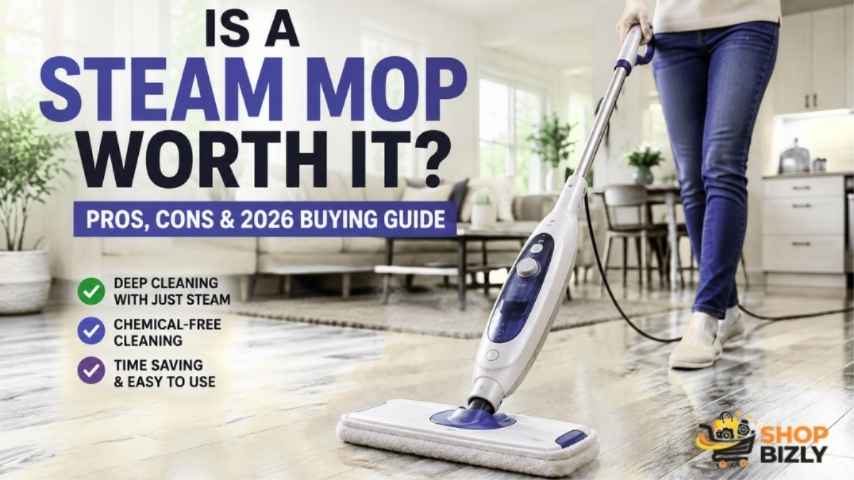
Is a Steam Mop Worth It? Pros, Cons & What You Should Know in 2026
If you have ever finished mopping your floors only to wonder whether they are actually clean, you are not alone. Traditional mopping can remove visible dirt, but it often means carrying around a bucket, using cleaning solutions, rinsing the mop repeatedly, and waiting for the floor to dry.
That is where a steam mop sounds appealing.
Instead of relying heavily on cleaning chemicals, a steam mop uses heated water to produce steam that loosens dirt and grime from sealed hard floors. It can make routine floor cleaning faster and more convenient, especially when you are dealing with everyday messes, sticky spots, and tracked-in dirt.
But is a steam mop actually worth buying?
For many households, yes—a steam mop can be worth it if you have compatible sealed hard floors and want a faster, low-chemical way to clean everyday messes. However, it is not automatically better than a traditional mop, and it should not be used on every type of flooring.
The real question is not simply whether steam mops work. The better question is whether a steam mop fits your floors, your cleaning habits, and the type of dirt you normally deal with.
In this guide, we’ll look at the real benefits and disadvantages of steam mops, how they compare with traditional mopping, why floors can sometimes still look dirty after steam cleaning, and who should—and should not—buy one.
Quick Answer: Are Steam Mops Actually Worth It?
A steam mop can be a worthwhile cleaning tool if your home has sealed hard flooring and you want a convenient way to clean routine dirt without constantly using traditional floor-cleaning solutions.
The biggest advantages are convenience, quick setup, and the ability to clean with water rather than relying on a bucket full of cleaning solution. Many models also heat up quickly and come with washable microfiber pads, which can make frequent cleaning easier.
However, steam mops have limitations.
They are not vacuum cleaners, they do not magically remove every type of dirt, and they are not appropriate for every flooring material. Heavy debris should usually be removed before steam mopping, while spills and sticky messes may require additional cleaning.
So, is a steam mop worth it?
For the right home, absolutely. For the wrong floor or the wrong cleaning expectations, probably not.
What Is a Steam Mop?
A steam mop is an electric floor-cleaning appliance that heats water inside a small tank and produces steam. That stream is directed through the mop head and onto the floor, where it helps loosen dirt and grime.
Most steam mops are designed to be used with a microfiber cleaning pad attached to the mop head. As you move the mop across the floor, the loosened dirt can be picked up by the pad.
Unlike a traditional mop, you generally don’t need a bucket of water sitting beside you while cleaning.
That simple difference is one of the main reasons people consider buying a steam mop.
A typical cleaning routine looks something like this:
- Remove loose dust, hair, crumbs, and debris.
- Fill the steam mop’s water tank according to the manufacturer’s instructions.
- Allow the mop to heat up.
- Attach a clean microfiber pad.
- Move the mop across the floor.
- Wash or replace the pad when it becomes dirty.
This can make everyday floor maintenance feel much less complicated.
However, there is an important distinction to understand: steam cleaning is not the same thing as vacuuming or physically removing loose debris.
If you push a steam mop over a floor covered with pet hair, crumbs, sand, or dust, you may simply spread some of that debris around.
That is why preparation still matters.
How Does a Steam Mop Clean Floors?
The basic idea is surprisingly simple.
Water is heated inside the appliance until it produces steam. The hot steam is then released through the mop head while you move the appliance over the floor.
The combination of heat, moisture, and mechanical movement helps loosen everyday dirt and residue. The microfiber pad then picks up much of what has been loosened.
This is one reason steam mops can feel different from conventional mopping.
With a traditional mop, cleaning depends heavily on the cleaning solution, water, mop material, and physical scrubbing. With a steam mop, the heat generated by the appliance becomes part of the cleaning process.
But that does not mean hotter steam automatically equals a cleaner floor.
Your technique matters too.
Moving the mop too quickly may not give the steam enough time to loosen stubborn residue. On the other hand, repeatedly holding steam over one area can expose some flooring materials to unnecessary heat and moisture.
The safest approach is always to follow the flooring manufacturer’s recommendations and the steam mop manufacturer’s instructions.
Why Do People Like Steam Mops?
The biggest attraction is convenience.
Think about a typical quick kitchen cleanup. You notice footprints, dried food spots, or a few sticky areas on the floor. With a traditional mop, you may need to fill a bucket, add cleaner, carry everything around, and then deal with the dirty water afterward.
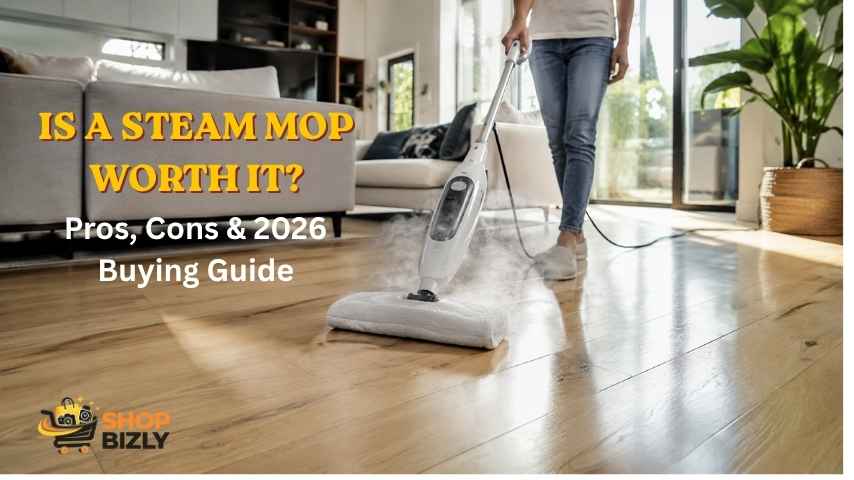
A steam mop can reduce that setup.
For many models, you simply add water, wait for the appliance to heat, and start cleaning.
That makes steam mops particularly appealing for people who clean their floors frequently.
1. Less Setup
There is no large bucket to carry around.
You don’t need to mix a floor-cleaning solution every time you want to clean a small area.
For quick cleaning sessions, that convenience can make a bigger difference than people initially expect.
2. Useful for Everyday Messes
Steam mops can be useful for dealing with common household messes such as
- Footprints
- Light dirt
- Dried spots
- Everyday kitchen residue
- Light grime
- General floor buildup
They are especially convenient when you want to refresh a floor without doing a full deep-cleaning session.
3. Reusable Microfiber Pads
Many steam mops use washable microfiber pads.
Instead of continuously buying disposable mop heads, you can wash the reusable pads and use them again.
Of course, the exact lifespan and cleaning instructions depend on the specific pad and manufacturer.
4. No Bucket of Dirty Water
This is one of the most noticeable differences compared with traditional mopping.
With a bucket mop, the water gradually becomes dirty as you clean.
A steam mop doesn’t work that way. You add clean water to the tank, and the microfiber pad collects the loosened dirt.
That doesn’t mean the pad stays clean indefinitely.
In fact, one common reason people feel that a steam mop isn’t cleaning well is that they continue using a heavily soiled microfiber pad.
A dirty pad can simply redistribute grime instead of picking it up effectively.
Is Steam Cleaning Better Than Mopping?
Not necessarily.
It depends on what you mean by “better.”
A steam mop can be more convenient than traditional mopping for routine maintenance. It can also reduce the need to handle a bucket and cleaning solution.
But traditional mopping still has advantages.
For example, if you are dealing with a large spill, heavily soiled flooring, or a cleaning situation that requires a specific floor-safe cleaning solution, a conventional mop may be more appropriate.
The two methods are simply different tools for different situations.
Steam Mop vs. Traditional Mop
| Feature | Steam Mop | Traditional Mop |
|---|---|---|
| Setup | Usually quick | Requires bucket and water |
| Water used | Relatively small tank | Larger bucket |
| Cleaning solution | Often unnecessary | Commonly used |
| Everyday maintenance | Very convenient | Effective but more involved |
| Heavy spills | Not always ideal | Often more practical |
| Loose debris | Should be removed first | Also usually needs sweeping |
| Drying | Often relatively quick | Depends on water amount |
| Floor compatibility | Must be checked carefully | Depends on mop/cleaner |
| Reusable pads | Common | Common |
| Electricity | Required | Not required |
The important takeaway is that a steam mop should not necessarily replace every other cleaning method in your home.
For many people, it works best as a maintenance-cleaning tool.
The Biggest Question: What Type of Floor Do You Have?
Before buying a steam mop, this is probably the most important thing to check.
Steam mops are not universally safe for every flooring material.
Some sealed hard floors may be compatible with steam cleaning, while certain flooring manufacturers specifically advise against using steam.
This is particularly important with materials such as hardwood, laminate, and some types of vinyl flooring.
Even when a floor looks durable, its construction, finish, seams, adhesives, and moisture resistance can affect whether steam cleaning is appropriate.
Hardwood Floors
Hardwood requires extra caution.
A sealed hardwood floor may tolerate certain cleaning methods, but that doesn’t mean every steam mop or steam setting is automatically safe.
Excessive heat and moisture can potentially create problems if moisture gets into seams or the finish is not suitable for steam cleaning.
If you are considering steam cleaning hardwood floors, check the flooring manufacturer’s care instructions first.
This is more important than simply relying on what another homeowner says worked for them.
Laminate Floors
Laminate flooring can also require caution.
Unlike a solid waterproof surface, laminate typically consists of multiple layers, and moisture entering the seams can potentially cause problems.
Some manufacturers may allow specific steam-cleaning methods, while others recommend avoiding steam completely.
So before using a steam mop on laminate, check both the flooring documentation and the steam mop manufacturer’s recommendations.
Vinyl and LVP Floors
Luxury vinyl plank and other vinyl flooring can be attractive candidates for easy cleaning, but again, compatibility should not be assumed.
The safest approach is to verify the flooring manufacturer’s care instructions.
This is particularly important if your floor has special coatings, sensitive seams, or installation requirements.
Bottom line: The question isn’t simply “Can a steam mop clean this floor?” The more important question is “Does the flooring manufacturer approve steam cleaning for this floor?”
What Are the Disadvantages of Using a Steam Mop?
Steam mops have plenty of advantages, but they are not perfect.
If you are thinking about buying one, it is worth knowing the downsides before spending your money. In fact, understanding the disadvantages can help you decide whether a steam mop is actually worth it for your home.
1. You Still Need to Remove Loose Dirt First
One of the biggest misconceptions about steam mops is that they can replace sweeping or vacuuming.
They can’t.
If your floor is covered with pet hair, crumbs, dust, sand, or other loose debris, steam mopping first can make the cleaning process harder.
The steam can make some debris wet and sticky, while the microfiber pad can become dirty very quickly.
For the best results, vacuum or sweep the floor before steam mopping.
This simple step can make a surprisingly big difference.
2. They Are Not Ideal for Every Floor
This is probably the biggest limitation.
A steam mop is a poor choice if your flooring manufacturer specifically says not to use steam.
Even if you see someone online using a steam mop successfully on a particular floor, that does not necessarily mean your flooring has the same construction or finish.
Flooring materials can vary significantly between manufacturers and installations.
So the safest rule is simple:
Check the manufacturer’s cleaning instructions before using steam.
3. Stubborn Grime May Still Need Scrubbing
Steam can help loosen dirt, but it doesn’t eliminate the need for physical cleaning in every situation.
A heavily dried-on mess may require additional passes or manual scrubbing.
For example, imagine a kitchen floor with an old sticky food residue that has been sitting there for days.
A steam mop may soften the residue, but you may still need to slow down, use the appropriate cleaning method, or manually address the spot.
That’s why it is better to think of a steam mop as a cleaning aid rather than a magic floor-cleaning machine.
4. Microfiber Pads Get Dirty
The microfiber pad is doing a lot of the actual dirt pickup.
Once it becomes heavily soiled, cleaning performance can drop.
This is particularly noticeable in homes with pets, children, or high foot traffic.
If you keep using the same dirty pad across the entire floor, you may end up moving dirt from one section to another.
Having several washable pads available can make steam cleaning much more practical.
5. You Need Electricity
Unlike a traditional mop, a steam mop needs an electrical outlet.
That means dealing with a power cord on many models, although cordless options are available.
For a large home, the cord length and outlet placement can become a minor annoyance.
It is not a deal-breaker for most people, but it is something to consider.
6. You Have to Wait for the Mop to Heat Up
Most steam mops need some time to heat the water before they are ready.
The waiting period is usually manageable, but it means a steam mop isn’t always as instant as grabbing a dry microfiber mop.
For quick spot cleaning, that difference may matter.
7. Maintenance Is Still Required
A steam mop may reduce cleaning effort, but it does not eliminate maintenance.
You still need to:
- Wash microfiber pads
- Empty or refill the water tank
- Clean the mop when necessary
- Follow the manufacturer’s maintenance instructions
- Store it properly
If you never wash the microfiber pad, the appliance won’t perform at its best.
And depending on your water quality and the manufacturer’s recommendations, water-related maintenance may also be necessary.
Why Are My Floors Still Dirty Even After Steam Mopping?
This is one of the most common questions people ask after buying a steam mop.
If your floor still looks dirty after steam cleaning, the problem may not be the steam mop itself.
There are several possible reasons.
You’re Steam Mopping Without Vacuuming First
This is probably the easiest mistake to fix.
Dust, hair, crumbs, and grit should generally be removed before wet or steam cleaning.
Otherwise, the microfiber pad has to deal with both loose debris and stuck-on dirt at the same time.
Start with a vacuum or broom.
Then steam mop.
That simple two-step process usually makes more sense than expecting one appliance to do everything.
Your Microfiber Pad Is Too Dirty
A clean floor requires a reasonably clean pad.
If you begin with a dirty microfiber pad and use it across the entire room, you may spread residue instead of collecting it.
For larger homes, changing the pad during cleaning can be worthwhile.
Think of the pad as the part of the system that actually captures much of the loosened dirt.
You’re Moving Too Quickly
Steam needs some contact time to loosen stubborn residue.
If you rush across the floor at high speed, you may not give the steam enough opportunity to work.
That doesn’t mean you should hold a steam mop over one spot for a long time.
Instead, use a controlled pace and follow the manufacturer’s instructions.
The Floor Has a Built-Up Residue
Sometimes the problem isn’t ordinary dirt.
If a floor has accumulated residue from cleaning products over time, steam alone may not completely remove it.
You may need to identify what caused the buildup and use a floor-safe cleaning method recommended by the flooring manufacturer.
You’re Expecting a Steam Mop to Deep Clean Everything
This is another important point.
A steam mop is excellent for many routine cleaning tasks, but it isn’t a replacement for every type of floor-cleaning equipment.
It doesn’t vacuum.
It doesn’t automatically remove heavy debris.
It doesn’t fix damaged flooring.
And it won’t make an extremely neglected floor look brand new after one pass.
Realistic expectations are a big part of getting good results.
Are Steam Cleaners Better Than Mopping?
This depends on the cleaning situation.
If your goal is quick everyday maintenance, a steam mop can be more convenient than traditional mopping.
You don’t need to prepare a bucket of cleaning solution, and many models are ready to use relatively quickly.
But traditional mopping still has an important place.
A conventional mop can be useful when you need to apply a specific floor-safe cleaning solution, clean up a large spill, or handle a situation where steam isn’t recommended.
So rather than asking which method is universally better, ask:
Which method is better for this particular cleaning job?
That mindset leads to a much more practical answer.
When a Steam Mop Makes More Sense
A steam mop may be a good choice when:
- You clean hard floors frequently.
- You want a quick cleaning routine.
- You dislike carrying a bucket.
- You prefer using water rather than frequently mixing cleaning solutions.
- You have compatible sealed flooring.
- You want reusable microfiber pads.
- You regularly deal with everyday footprints and light grime.
When a Traditional Mop Makes More Sense
A traditional mop may be more practical when:
- Your flooring manufacturer prohibits steam.
- You need to clean a large liquid spill.
- You need a particular floor-safe cleaning solution.
- You don’t want to use an electrical appliance.
- You only mop occasionally.
- Your cleaning needs are mostly heavy-duty rather than routine maintenance.
Is a Steam Mop Worth It for Pet Owners?
It can be—but there is an important catch.
Pet owners often deal with hair, paw prints, muddy footprints, food particles, and occasional accidents.
A steam mop can be useful for the hard-floor cleanup after loose debris has been removed.
For example, you might vacuum up pet hair and loose dirt first, then use a steam mop to clean the remaining floor surface.
But a steam mop should not be treated as a substitute for vacuuming.
If your home has a lot of pet hair, a vacuum is still one of the most important cleaning tools you can own.
The steam mop becomes the second step.
Is a Steam Mop Worth It for Families With Children?
For families with children, convenience can be a major advantage.
Kids can quickly turn a clean floor into a collection of footprints, crumbs, and small spills.
A steam mop can make frequent floor maintenance easier because you can clean without setting up a traditional bucket every time.
However, safety still matters.
Keep children away from the hot steam and the appliance while it is operating. Always follow the manufacturer’s safety instructions.
The goal is not simply to clean faster.
It’s to make regular cleaning easy enough that you actually do it more consistently.
Who Should Buy a Steam Mop?
A steam mop is probably worth considering if you recognize yourself in several of these situations:
You clean frequently.
If your floors need regular maintenance, convenience becomes valuable.
You dislike traditional mopping.
If carrying a bucket and mixing cleaner makes you put off cleaning, a steam mop can reduce that friction.
You have compatible hard flooring.
This is essential. Always verify compatibility first.
You want a simple routine.
Water, heat, a microfiber pad, and a controlled cleaning motion can be a straightforward system.
You want reusable cleaning pads.
Washable microfiber pads can reduce the need for disposable mop heads.
Who Should Skip a Steam Mop?
A steam mop may not be worth buying if:
- Your flooring manufacturer doesn’t recommend steam.
- You rarely clean your floors.
- You already have a cleaning system that works perfectly for you.
- Most of your home has carpet or rugs.
- You need a vacuum more than a floor mop.
- You expect one appliance to handle every type of dirt.
- You dislike maintaining washable microfiber pads.
Sometimes the best purchase is the product you actually need—not the product that sounds most impressive.
How to Get Better Results From a Steam Mop
If you already own a steam mop, a few simple habits can improve the results.
Vacuum or Sweep First
Remove loose dirt before introducing steam.
This protects the microfiber pad from becoming overloaded with debris.
Start With a Clean Pad
Don’t begin a whole-house cleaning session with yesterday’s dirty microfiber pad.
Use a fresh, clean pad whenever possible.
Work in Manageable Sections
Instead of randomly moving around the room, work systematically.
Clean one section, then move to the next.
This makes it easier to notice which areas need additional attention.
Don’t Rush
Move at a controlled pace rather than racing across the floor.
Give the steam enough opportunity to loosen everyday grime while still following the appliance’s instructions.
Don’t Over-Wet the Floor
More steam is not automatically better.
The goal is effective cleaning—not leaving excessive moisture behind.
Always use the recommended steam setting and cleaning method for your flooring.
Follow the Floor Manufacturer’s Instructions
This may be the most important tip of all.
The steam mop manufacturer’s instructions tell you how to operate the appliance.
The flooring manufacturer tells you whether your floor can safely tolerate that cleaning method.
You need both pieces of information before using steam on a particular surface.
Steam Mop vs. Spin Mop vs. Wet Mop
A steam mop isn’t the only alternative to traditional mopping.
Spin mops, wet mops, spray mops, and microfiber mops can all be useful depending on the situation.
A steam mop generally makes the most sense for people who value quick setup and steam-based cleaning.
A spin mop can be attractive if you want strong manual cleaning power without electricity.
A spray mop can be excellent for quick maintenance when you want a lightweight and simple solution.
There isn’t one perfect mop for every household.
The best choice depends on your floor type, cleaning frequency, budget, and personal preference.
The Hidden Value of a Steam Mop: Convenience
When people compare cleaning tools, they often focus only on cleaning power.
But convenience can be just as important.
Imagine you notice a few dirty footprints in your kitchen.
If cleaning requires filling a bucket, finding a cleaner, carrying everything into the kitchen, and then dealing with dirty water afterward, you may decide to wait.
If the alternative is grabbing a lightweight steam mop and starting a quick cleaning session, you’re more likely to clean the floor immediately.
That is where a steam mop can become genuinely valuable.
It may not completely transform the physical act of cleaning, but it can reduce the friction between noticing dirt and actually cleaning it.
For someone who cleans frequently, that convenience can make the purchase worthwhile.
The Bottom Line So Far
A steam mop isn’t a miracle cleaner, and it isn’t automatically better than a traditional mop.
Its real strength is convenient routine cleaning on compatible hard floors.
It can be especially useful when you want a faster setup, reusable microfiber pads, and a cleaning method that relies primarily on water.
But the disadvantages matter too.
You still need to remove loose debris, wash the pads, deal with stubborn grime, and verify that your flooring is compatible with steam.
That means the value of a steam mop ultimately comes down to one question:
Will it make your regular cleaning routine easier without creating a problem for your flooring?
If the answer is yes, a steam mop can be a very worthwhile addition to your cleaning setup.
What Should You Look for When Buying a Steam Mop?
If you’ve decided that a steam mop may be worth it, don’t assume that the most expensive model is automatically the best choice.
For most households, a few practical features matter much more than a long list of accessories.
Steam Control
Adjustable steam control can be useful because different cleaning jobs may require different amounts of steam.
A lower setting can be more practical for lighter maintenance, while a stronger setting may help with tougher messes—provided the flooring is compatible with steam.
More steam isn’t always better, though. Your floor’s care instructions should always come first.
A Large Enough Water Tank
A small water tank can be perfectly fine if you’re cleaning a bathroom or a small kitchen.
But if you plan to clean several rooms at once, constantly stopping to refill the tank can become frustrating.
Think about the size of your home and how often you expect to use the steam mop.
Washable Microfiber Pads
Reusable microfiber pads are one of the most useful accessories to have.
Ideally, you’ll want several pads so you can switch to a clean one during longer cleaning sessions.
This is particularly useful for homes with pets, children, or heavy foot traffic.
Easy-to-Use Controls
A steam mop should make cleaning easier—not turn it into a complicated project.
Look for straightforward controls, a comfortable handle, and a mop head that can move easily around furniture.
A Flexible Mop Head
A swivel-style mop head can make it easier to clean around table legs, chairs, cabinets, and other obstacles.
This may sound like a small feature, but you’ll notice its value during regular cleaning.
Useful Attachments
Some steam cleaners come with a huge collection of accessories.
That can sound impressive, but don’t buy a model simply because it includes twenty attachments.
If your primary goal is cleaning floors, prioritize floor-cleaning performance, maneuverability, steam control, and pad quality.
Extra attachments are useful only if you’ll actually use them.
Is an Expensive Steam Mop Worth It?
Not necessarily.
A more expensive steam mop may offer better construction, additional controls, more accessories, or a more convenient design.
But the jump in price doesn’t always translate into dramatically better floor cleaning.
For a basic household cleaning routine, you may not need every premium feature.
Instead, consider what problem you’re trying to solve.
If you want:
- Faster floor maintenance
- Easier setup
- Reusable pads
- Better maneuverability
- More control over steam output
Then spending more for the right features may make sense.
But if you simply want a basic steam mop for occasional cleaning, an expensive model may be unnecessary.
The best value is usually the model that fits your cleaning routine—not the one with the longest feature list.
Common Steam Mop Mistakes to Avoid
Even a good steam mop can produce disappointing results if you use it incorrectly.
Mistake #1: Steam Mopping Before Vacuuming
This is one of the easiest mistakes to make.
Loose dirt should generally be removed first.
Think of the process as
Vacuum or sweep → Steam mop → Allow the floor to dry appropriately.
That simple sequence can improve the overall cleaning experience.
Mistake #2: Using a Dirty Pad
A microfiber pad becomes increasingly dirty as it collects grime.
If you continue using it for the entire house, you’re not giving the steam mop the best chance to perform.
Keep multiple washable pads available and change them when necessary.
Mistake #3: Ignoring the Flooring Manufacturer
This can be the most expensive mistake.
Never assume that because a floor looks waterproof, it is automatically suitable for steam cleaning.
Always check the flooring manufacturer’s instructions.
Mistake #4: Holding Steam Over One Spot
More heat and moisture don’t automatically mean better cleaning.
Keeping steam concentrated on one area for too long can be unnecessary and may increase the risk of damage on flooring that isn’t designed for that type of exposure.
Keep the mop moving and follow the manufacturer’s instructions.
Mistake #5: Expecting One Pass to Remove Everything
Some messes need more attention.
A steam mop can loosen and collect everyday grime, but heavily dried or sticky residue may require additional cleaning.
Don’t judge the entire appliance based on one stubborn spot.
Mistake #6: Using the Wrong Water or Cleaning Solution
Different steam mop manufacturers have different instructions regarding water and cleaning solutions.
Some products are designed for water-only operation.
Others may have specific requirements.
Never add a cleaning solution, fragrance, essential oil, or another substance to the water tank unless the manufacturer explicitly says it is safe to do so.
Can a Steam Mop Replace a Regular Mop?
For some people, almost—but not completely.
If you primarily clean compatible hard floors and your everyday messes are light to moderate, a steam mop may handle much of your routine floor maintenance.
But keeping a traditional mop or another cleaning method available can still be useful.
There may be times when you need to:
- Clean up a large liquid spill
- Use a specific floor-safe cleaning solution
- Clean a floor that shouldn’t be steam cleaned
- Handle a particularly heavy mess
So rather than thinking of a steam mop as a universal replacement, think of it as another tool in your cleaning system.
For some homes, it may become the primary floor-cleaning tool.
For others, it may simply be a convenient secondary option.
How Often Should You Use a Steam Mop?
There isn’t one perfect schedule for every household.
Cleaning frequency depends on:
- Number of people in the home
- Pets
- Foot traffic
- Type of flooring
- Kitchen activity
- Children
- Personal cleaning preferences
A busy household may benefit from frequent light cleaning, while someone living alone may only need occasional maintenance.
The important thing is not to steam clean simply because you think more cleaning must be better.
Use the cleaning frequency recommended for your flooring and follow the steam mop manufacturer’s guidance.
Is a Steam Mop Environmentally Friendly?
A steam mop can reduce the need for some conventional cleaning products because many models are designed to clean using water.
That can mean fewer bottles of floor cleaner and less disposable cleaning material.
However, it still uses electricity, and microfiber pads need to be washed.
So it would be an exaggeration to describe every steam mop as completely “green.”
A more accurate way to look at it is that a steam mop can potentially reduce your reliance on certain disposable cleaning products while giving you reusable cleaning pads.
Your overall environmental impact depends on how you use, maintain, and eventually replace the appliance and its accessories.
Is a Steam Mop Worth It for Small Apartments?
For a small apartment, a steam mop can actually make a lot of sense.
You may not need a large water tank, and quick setup can be more valuable when you only have a limited amount of flooring to clean.
A compact model can also be easier to store.
However, if your apartment has mostly carpet, there may be little reason to buy a dedicated steam mop.
Again, floor type and cleaning habits matter more than the size of the home.
Is a Steam Mop Worth It for a Large House?
It can be, especially if the home has a lot of compatible hard flooring.
But tank capacity, cord length, cleaning-pad availability, and maneuverability become more important.
A small tank that requires frequent refilling may become annoying when cleaning a large house.
In this situation, a model designed for longer cleaning sessions may provide better value.
Steam Mop vs. Vacuum Mop
It’s also worth understanding the difference between a steam mop and a vacuum mop.
A traditional steam mop primarily focuses on steam-based floor cleaning.
A vacuum mop, depending on the design, may combine debris pickup with wet cleaning.
That can be appealing if you want fewer cleaning steps.
However, these are different categories of products.
If your biggest problem is pet hair, crumbs, and loose debris, vacuuming may be more important than steam cleaning.
If your biggest problem is everyday grime on compatible hard floors, a steam mop may be enough.
And if you want one machine to handle both debris and wet cleaning, a vacuum-mop combination may be worth investigating instead.
Are Steam Mops Actually Worth It?
Yes—for the right user.
A steam mop is worth considering if you want a convenient way to maintain compatible sealed hard floors and reduce the hassle of traditional mopping.
The biggest benefit isn’t that steam magically makes every floor cleaner.
The real benefit is convenience.
You can often move from “I need to clean the floor” to actually cleaning it with less preparation.
That can encourage more frequent maintenance, which ultimately matters more than having the most powerful cleaning appliance.
But if your floors are not compatible with steam, or if you only mop occasionally, buying one may not make much sense.
What Are the Disadvantages of Using a Steam Mop?
The main disadvantages include:
- Not suitable for every flooring material
- Requires electricity
- Needs regular microfiber-pad cleaning
- Doesn’t replace vacuuming
- May struggle with heavy or deeply embedded dirt
- Can require heating time
- Requires proper maintenance
- May not be ideal for large spills
- Can damage incompatible flooring if used incorrectly
The biggest concern is usually floor compatibility.
Before focusing on steam power or accessories, make sure your flooring manufacturer allows steam cleaning.
Why Are My Floors Still Dirty Even After Steam Mopping?
If your floor still looks dirty, check these common causes:
- You didn’t remove loose dirt first.
- The microfiber pad was already dirty.
- You moved the mop too quickly.
- The floor has old cleaning-product residue.
- The mess requires additional scrubbing.
- You’re expecting steam to replace every other cleaning step.
A steam mop works best as part of a simple cleaning routine rather than as a one-step solution for every type of dirt.
Are Steam Cleaners Better Than Mopping?
Steam cleaners aren’t universally better than traditional mopping.
They can be better for convenience, quick setup, and routine maintenance on compatible flooring.
Traditional mops can be better for certain spills, specific cleaning solutions, and situations where steam isn’t recommended.
The best option depends on the floor, the mess, and your cleaning habits.
Frequently Asked Questions
Is a steam mop really worth buying?
For many households, yes. A steam mop can be worthwhile if you regularly clean compatible sealed hard floors and value quick setup and convenient routine cleaning. However, it isn’t necessary for every home, especially if your flooring isn’t approved for steam or you rarely mop.
Can steam mops damage floors?
They can if they are used on flooring that isn’t designed for steam or if they are used incorrectly. Excessive heat and moisture can be problematic for some flooring materials. Always follow the flooring manufacturer’s care instructions before using a steam mop.
Can I use a steam mop without vacuuming first?
You can, but it generally isn’t the best approach. Loose dirt, hair, crumbs, and grit should usually be removed before steam cleaning. Vacuuming or sweeping first allows the steam mop and microfiber pad to focus on the grime that actually needs wet cleaning.
Do steam mops clean better than regular mops?
Not in every situation. Steam mops can be more convenient for routine cleaning, while traditional mops can be more versatile for certain spills and floor-cleaning solutions. Cleaning performance also depends on the floor, the microfiber pad, cleaning technique, and type of dirt.
How often should I wash a steam mop pad?
Wash the microfiber pad after use according to the manufacturer’s instructions, especially if it becomes visibly dirty. For larger cleaning jobs, changing pads during the session can help prevent spreading dirt across the floor.
Can I put floor cleaner in a steam mop?
Only if the manufacturer specifically says that the product is designed to accept a cleaning solution. Many steam mops are intended to operate with water only. Adding unauthorized chemicals or other substances can damage the appliance or create a safety issue.
Is a steam mop better for homes with pets?
It can be useful for maintaining compatible hard floors in homes with pets, particularly for paw prints and everyday grime. However, vacuuming is still important for removing pet hair, loose dirt, and debris before steam mopping.
Final Verdict: Is a Steam Mop Worth It?
So, after looking at the benefits, disadvantages, floor compatibility, cleaning performance, and everyday convenience, is a steam mop worth it?
Yes, but with an important condition: your flooring needs to be compatible with steam.
For the right household, a steam mop can be one of those cleaning tools that earns its place simply because it makes regular cleaning easier.
You don’t need to carry a bucket around.
You can use reusable microfiber pads.
You can clean everyday dirt and grime with a relatively simple routine.
And because the setup is convenient, you may find yourself cleaning the floor more frequently instead of waiting until it becomes noticeably dirty.
But a steam mop isn’t a magic solution.
You still need to remove loose debris first. You still need clean microfiber pads. You may need to deal with stubborn spots separately. And most importantly, you need to respect the cleaning requirements of your flooring.
If your home has compatible sealed hard floors and you want a convenient alternative to traditional mopping, a steam mop is absolutely worth considering in 2026.
If your flooring manufacturer recommends avoiding steam, however, don’t buy one simply because it is popular.
In the end, the best cleaning tool isn’t necessarily the one with the most power.
It’s the one that fits your floor, your cleaning routine, and the messes you actually deal with.
The Simple Buying Rule
Compatible floors + frequent cleaning + desire for convenience = a steam mop can be worth it.
Incompatible floors + occasional mopping + no need for extra convenience = you probably don’t need one.
That is the most honest answer to the question: Is a steam mop worth it?