Steam Mop vs Regular Mop: Which One Is the Better Choice for Your Home?
Cleaning your floors may seem simple until you start wondering whether a steam mop vs. a regular mop is the better option. Both are designed to keep your home clean, but they work in completely different ways and aren’t ideal for the same situations.
Some homeowners love the convenience of steam cleaning because it uses heat instead of relying heavily on cleaning chemicals. Others still prefer a traditional mop because it’s affordable, familiar, and works well on a wide range of surfaces.
So, which one actually deserves a place in your cleaning routine?
The answer depends on your flooring, your cleaning habits, and what you expect from a mop. Choosing the wrong type could leave delicate floors damaged, waste your cleaning time, or cost more money than necessary.
In this guide, you’ll learn the real differences between a steam mop and a regular mop, discover where each one performs best, and understand which option makes the most sense for your home. Whether you’re cleaning tile, hardwood, laminate, or vinyl flooring, this comparison will help you make a confident decision.
steam mop vs regular mop Quick Answer
If you’re comparing steam mop vs regular mop, there’s no single winner for every home.
A steam mop is generally better for sealed hard floors because hot steam can loosen dirt and reduce the need for harsh cleaning chemicals. It can also make routine cleaning faster on surfaces such as sealed tile and some sealed stone floors.
A regular mop, on the other hand, remains a practical choice for delicate flooring, heavy liquid spills, and situations where steam is not recommended. It also costs less and doesn’t require electricity.
In short:
- Choose a steam mop if you want faster sanitizing and everyday maintenance on compatible sealed floors.
- Choose a regular mop if you need maximum versatility, have delicate flooring, or prefer a lower-cost cleaning solution.
The best choice depends on the type of flooring in your home rather than simply choosing the newest cleaning tool.
Why Are So Many People Comparing Steam Mop vs Regular Mop?
This comparison has become increasingly popular because modern homes use many different flooring materials. A cleaning tool that works perfectly on ceramic tile may not be the safest option for engineered hardwood or older laminate flooring.
Many homeowners also want to:
- Clean faster without spending extra time scrubbing.
- Reduce the amount of cleaning chemicals used indoors.
- Remove sticky messes more efficiently.
- Keep floors looking newer for longer.
- Save money by buying the right cleaning tool the first time.
Instead of asking, “Which mop is better?” the smarter question is:
“Which mop is better for my specific floors and cleaning routine?”
That simple shift makes it much easier to choose the right option.
steam mop vs regular mop How Does a Steam Mop Actually Work?
Unlike a traditional mop, a steam mop doesn’t rely on a bucket filled with soapy water.
Instead, it heats water inside a built-in tank until it becomes hot steam. The steam passes through a microfiber cleaning pad, helping loosen dirt, dried stains, grease, and everyday grime from compatible sealed hard floors.
Because the cleaning pad stays attached while you move across the floor, dirt is lifted rather than pushed around. Many people also appreciate that, in normal situations, only water is needed instead of multiple cleaning products.
However, steam isn’t suitable for every floor. Some materials—especially unsealed wood or moisture-sensitive surfaces—may be damaged by excessive heat or moisture. That’s why checking your flooring manufacturer’s care instructions is always recommended before using a steam mop.
Steam Mop vs. Regular Mop: How Does a Regular Mop Work?
A regular mop follows a much more familiar cleaning method.
The mop head absorbs water mixed with your preferred floor cleaner, and you manually spread that solution across the surface before lifting away dirt and dust.
Although it usually requires more physical effort than steam cleaning, it offers greater flexibility. You can choose different cleaning solutions for different floor types, control how much moisture is applied, and safely clean many surfaces where steam may not be recommended.
Regular mops also come in several styles, including microfiber flat mops, sponge mops, cotton string mops, and spray mops, making them suitable for a wide variety of cleaning tasks.
Steam Mop vs Regular Mop: Side-by-Side Comparison
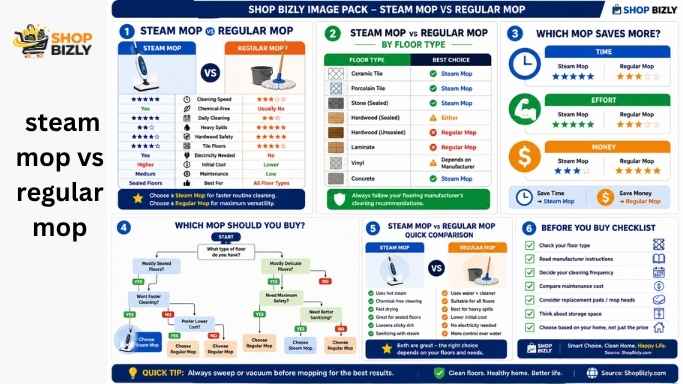
If you’re short on time, this quick comparison highlights the biggest differences between a steam mop vs regular mop before we explore each area in more detail.
| Feature | Steam Mop | Regular Mop |
|---|---|---|
| Cleaning Method | Uses hot steam | Uses water and cleaning solution |
| Power Source | Electricity | Manual |
| Chemicals Needed | Usually no. | Usually yes. |
| Best For | Sealed hard floors | Almost all floor types |
| Removes Sticky Dirt | Excellent | Good |
| Sanitizing Ability | Better with heat | It depends on cleaner used |
| Initial Cost | Higher | Lower |
| Maintenance | Replace microfiber pads | Replace mop heads |
| Daily Cleaning | Fast | Moderate |
| Heavy Liquid Spills | Not Ideal | Excellent |
Quick Take
If your priority is convenience and routine cleaning, a steam mop has several advantages. However, if versatility and affordability matter more, a regular mop still remains a dependable choice.
Steam Mop vs Regular Mop for Tile Floors
One of the biggest reasons homeowners compare a steam mop vs regular mop for tile floors is because ceramic and porcelain tiles are among the most common flooring materials.
Steam mops usually perform exceptionally well on sealed tile floors. The hot steam helps loosen dried dirt, kitchen grease, and everyday footprints while the microfiber pad lifts away residue in a single pass.
Regular mops can also clean tile effectively, especially when paired with a suitable floor cleaner. However, they often require more scrubbing when dealing with dried spills or sticky messes.
Steam Mop Advantages on Tile
- Cleans grout more effectively during routine maintenance.
- Uses little or no cleaning chemicals.
- Dries faster because less water remains on the floor.
- Leaves fewer streaks when used correctly.
Regular Mop Advantages on Tile
- Better for soaking up large liquid spills.
- Lower purchase cost.
- Works without electricity.
- Easy to use with different cleaning solutions.
Winner for Tile Floors: ⭐ Steam Mop
Steam Mop vs Regular Mop for Hardwood Floors
When comparing steam mop vs regular mop for hardwood floors, the answer becomes more complicated.
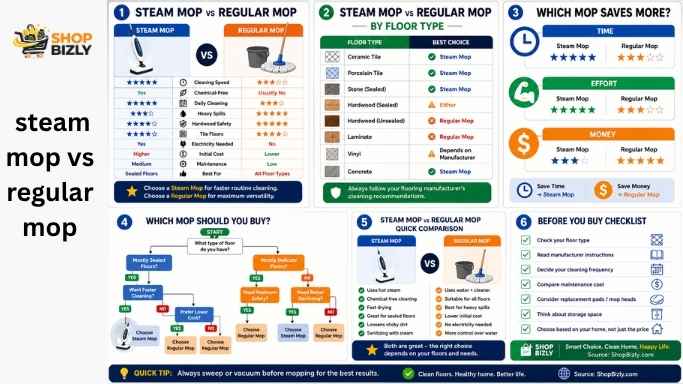
Not every hardwood floor should be cleaned with steam.
If the hardwood is sealed and the manufacturer approves steam cleaning, some steam mops can work safely when used carefully and without excessive moisture.
However, older, unsealed, waxed, or damaged hardwood floors can absorb moisture, potentially causing swelling, warping, or finish damage over time.
A microfiber regular mop that is only slightly damp remains the safer choice for many hardwood floors.
Steam Mop on Hardwood: Steam Mop vs. Regular Mop
Pros
- Fast routine cleaning.
- Minimal chemical use.
- Convenient for sealed floors.
Cons
- Not suitable for every hardwood floor.
- Requires checking manufacturer recommendations.
- Too much heat or moisture may damage certain finishes.
Regular Mop on Hardwood
Pros
- Better moisture control.
- Safer for delicate wood.
- Lower risk when used properly.
Winner for Hardwood Floors: ⭐ Regular Mop (for most homes)
Steam Mop vs Regular Mop for Laminate Floors
Laminate flooring looks similar to hardwood, but it reacts differently to moisture.
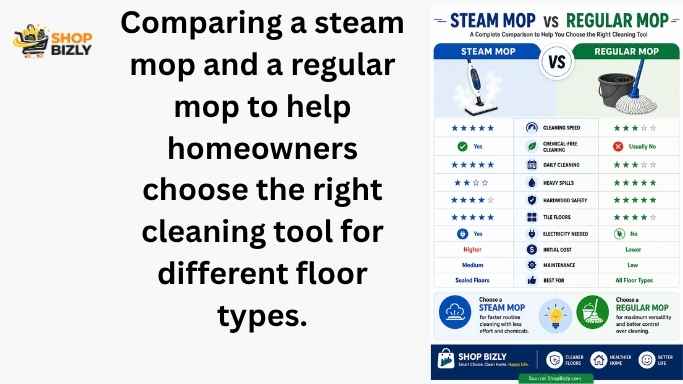
Many manufacturers recommend avoiding excessive heat and moisture because water can enter joints between planks.
A steam mop may be suitable only if the flooring manufacturer specifically allows it.
Otherwise, a lightly damp microfiber mop is generally the safer option.
steam mop vs regular mop Best Practice
✔ Check your flooring warranty.
✔ Never allow standing water.
✔ Clean spills immediately.
Winner: Regular Mop in most situations.
Steam Mop vs. Regular Mop: Which Mop Cleans Better?
Cleaning ability depends on the type of dirt you’re dealing with.
Steam Mop Works Best For
- Kitchen grease
- Sticky footprints
- Pet paw prints
- Everyday dust
- Light grime
- Routine maintenance
Steam softens dirt before the microfiber pad wipes it away, making daily cleaning feel easier.
steam mop vs regular mop Regular Mop Works Best For
- Mud
- Large spills
- Heavy wet messes
- Floors requiring special cleaners
- Deep washing after renovations
Because you can rinse the mop repeatedly and use stronger cleaning solutions when appropriate, traditional mops remain useful for tougher cleanup jobs.
Steam Mop vs. Regular Mop: Which Mop Is More Hygienic?
Many people ask:
Is a steam mop better than mopping?
The answer depends on your goal.
If you’re looking for routine cleaning with reduced chemical use, steam offers an advantage because high-temperature steam can help remove dirt while using only water on compatible sealed floors.
A regular mop can also maintain hygiene effectively, but the result depends on:
- Clean mop water
- Fresh mop heads
- Proper cleaning solution
- Correct cleaning technique
If dirty water is reused repeatedly, cleaning performance can decline.
Steam mop vs. regular mop: Which mop saves more time?
Busy homeowners often choose a steam mop because it combines several steps into one process.
With a steam mop, you usually:
- Fill the tank.
- Wait for it to heat.
- Start cleaning.
There’s no bucket to carry around, and many sealed floors dry relatively quickly afterward.
A regular mop typically involves:
- Filling a bucket.
- Mixing cleaner.
- Rinsing the mop multiple times.
- Emptying dirty water.
That extra preparation can make cleaning take longer, especially in larger homes.
Time Winner: ⭐ Steam Mop
Steam Mop vs. Regular Mop: Hidden Costs Most Buyers Don’t Think About
Price isn’t just about the purchase cost.
Steam Mop
Possible ongoing costs:
- Replacement microfiber pads
- Occasional descaling
- Electricity
- Water tank maintenance
Regular Mop
Possible ongoing costs:
- Mop head replacements
- Floor cleaner
- Buckets and accessories
- Cleaning chemicals
Looking at long-term ownership gives you a more realistic idea of overall value rather than focusing only on the initial purchase price.
Steam Mop Pros and Cons
Like any cleaning tool, a steam mop has strengths and limitations. Understanding both can help you decide whether it’s the right fit for your home.
Pros
- Cleans sealed hard floors quickly.
- Usually requires only water instead of chemical cleaners.
- Helps loosen sticky dirt and everyday grime.
- Floors often dry faster because less water is used.
- Lightweight models are easy to move around furniture.
Cons
- Not suitable for every floor type.
- Requires electricity.
- Initial purchase cost is usually higher.
- Needs occasional maintenance, such as cleaning the water tank or replacing microfiber pads.
- Cannot absorb large liquid spills like a traditional mop.
Regular Mop Pros and Cons
A regular mop has been a household essential for decades, and for good reason.
Pros
- Budget-friendly.
- Suitable for many different floor types.
- Excellent for soaking up water and liquid spills.
- No electricity required.
- Easy to find replacement mop heads.
Cons
- Usually requires a bucket and cleaning solution.
- Can spread dirty water if not rinsed properly.
- Often takes longer to clean large areas.
- May require more scrubbing on stubborn stains.
Who Should Choose a Steam Mop?
A steam mop is a great option if you:
- Have sealed tile or stone floors.
- Want to reduce the use of chemical cleaners.
- Clean your floors several times each week.
- Prefer quicker routine maintenance.
- Have children or pets and want an easy everyday cleaning routine.
Who Should Stick with a Regular Mop?
A regular mop may be the better choice if you:
- Have unsealed hardwood floors.
- Need to clean large liquid spills regularly.
- Want the lowest-cost cleaning solution.
- Prefer using specific floor-cleaning products.
- Have older flooring that may not tolerate steam.
Common Mistakes People Make
Choosing the wrong mop often leads to disappointing results. Here are a few common mistakes to avoid:
Using a Steam Mop on Every Floor
Not every surface is designed for steam. Always check the flooring manufacturer’s care instructions before using heat or steam.
Skipping Routine Sweeping
Whether you choose a steam mop or a regular mop, remove loose dust, sand, and debris first. This helps prevent scratches and improves cleaning results.
Using Too Much Water
More water doesn’t always mean cleaner floors. Excess moisture can damage some flooring materials over time.
Ignoring Mop Maintenance
Dirty microfiber pads or worn-out mop heads reduce cleaning performance. Wash or replace them regularly.
Is a Steam Mop Better Than a Regular Mop?
After comparing steam mop vs regular mop, the answer depends on what you expect from your cleaning routine.
If your home has mostly sealed tile floors, a steam mop offers fast, convenient cleaning with minimal chemicals.
If your home has older hardwood, delicate laminate, or mixed flooring, a regular mop provides greater flexibility and better moisture control.
Instead of asking which mop is universally better, ask:
Which mop is better for my floors?
That’s the question that leads to the right decision.
Final Verdict
There isn’t a one-size-fits-all winner in the steam mop vs regular mop debate.
Choose a steam mop if you:
- Want quicker routine cleaning.
- Prefer using little or no chemical cleaner.
- Have sealed hard floors.
- Value convenience and faster drying.
Choose a regular mop if you:
- Need maximum versatility.
- Clean a variety of floor types.
- Deal with frequent spills.
- Want an affordable cleaning solution.
For many households, the ideal setup is actually having both tools—using a regular mop for occasional deep cleaning and spills, while relying on a steam mop for everyday maintenance on compatible sealed floors.
Frequently Asked Questions (FAQ)
1. Is a steam mop better than mopping?
A steam mop can be better for routine cleaning on compatible sealed hard floors because it uses hot steam to loosen dirt while requiring few or no cleaning chemicals. A regular mop remains a better choice for some delicate floors and heavy spills.
2. What are the disadvantages of a steam mop?
Steam mops are not suitable for every floor type. They require electricity, cost more than traditional mops, and may damage unsealed or moisture-sensitive flooring if used incorrectly.
3. Is a steam mop better than a power mop?
Both tools have different strengths. Steam mops rely on hot steam for cleaning compatible sealed floors, while power mops often use rotating pads and cleaning solutions for scrubbing. The better choice depends on your flooring and cleaning needs.
4. Can I use a steam mop as a regular mop?
Not exactly. A steam mop is designed to clean using heated steam rather than soaking the floor with water. It cannot replace a regular mop in every situation, especially when cleaning large spills.
5. Should I mop before steam mopping?
Yes. Sweeping or vacuuming first is recommended. If the floor is extremely dirty, a quick traditional mop can remove heavy debris before steam cleaning for better overall results.