Steam Mop vs. Steam Cleaner Featured Snippet Paragraph
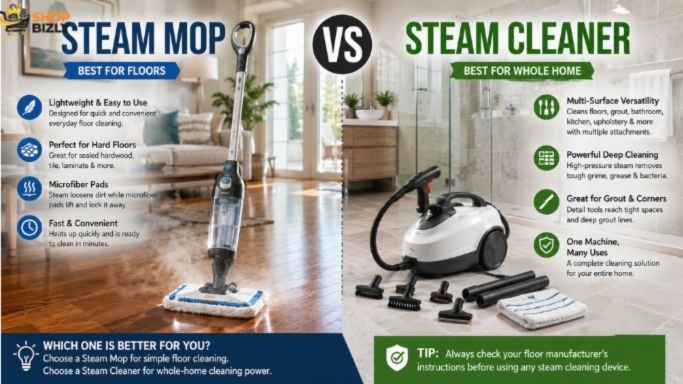
A steam mop is primarily designed to clean hard floors using steam and a microfiber pad, while a steam cleaner is a more versatile machine that can clean floors, grout, bathroom surfaces, countertops, upholstery, and other compatible areas with different attachments. If your main goal is quick and convenient floor cleaning, a steam mop is usually the simpler choice. If you want one machine for whole-home cleaning, a steam cleaner offers greater versatility. However, always check your flooring manufacturer’s instructions before using steam, especially on vinyl, laminate, hardwood, and other moisture-sensitive surfaces.
Table of Contents
- Steam Mop vs Steam Cleaner: What’s the Difference?
- Steam Mop vs Steam Cleaner Comparison
- Which One Cleans Floors Better?
- Steam Mop vs. Steam Cleaner for Tile
- Steam Mop vs Steam Cleaner for Hardwood Floors
- Can You Use a Steam Mop on Vinyl?
- How to Use a Steam Mop Correctly
- Steam Cleaner: When Is It the Better Choice?
- Pros & Cons
- Helpful Steam Mop Cleaning Tips
- Common Mistakes to Avoid
- Which One Should You Buy?
- Frequently Asked Questions
- Conclusion
Steam Mop vs Steam Cleaner: What’s the Difference?
At first glance, a steam mop and a steam cleaner can look almost identical. Both heat water and use steam to loosen dirt and grime. That is why many shoppers search for “steam mop vs steam cleaner” when they are trying to decide which appliance deserves a place in their cleaning closet.
The biggest difference is what the machine is designed to do.
A steam mop is essentially an electric floor mop. It normally has an upright body, a water tank, a steam system, and a flat microfiber cleaning pad. You push it across the floor much like a traditional mop, except it uses steam rather than a bucket of cleaning solution.
A steam cleaner is usually designed as a multi-purpose cleaning system. Depending on the model, it may come with a floor head, extension hose, detail nozzle, brushes, squeegee, upholstery tool, grout brush, and other accessories.
That makes a steam cleaner useful for more than just floors.
According to Which?, a steam mop is technically a type of steam cleaner, but its capabilities are more limited because its primary purpose is hard-floor cleaning.
So, the easiest way to remember the difference is
Steam mop = floor specialist.
Steam cleaner = multi-surface specialist.
That simple distinction can save you from buying a machine that does far more—or far less—than you actually need.
Steam Mop vs Steam Cleaner Comparison
| Feature | Steam Mop | Steam Cleaner |
|---|---|---|
| Primary purpose | Hard-floor cleaning | Multi-surface cleaning |
| Floor cleaning | Excellent | Excellent with correct attachment |
| Grout cleaning | Limited/model dependent | Usually better |
| Bathroom cleaning | Limited | Excellent with attachments |
| Upholstery | Usually not designed for it | Many models support it. |
| Countertops | Usually not | Often possible |
| Windows/glass | Usually not | Some models include a squeegee. |
| Ease of use | Very easy | Requires more setup |
| Attachments | Few or none | Multiple attachments |
| Storage | Compact | Usually larger |
| Best for | Everyday floor cleaning | Whole-home deep cleaning |
The difference isn’t necessarily about which machine produces “better” steam. It is mainly about design, attachments, control, and intended use.
For example, Consumer Reports notes that steam mops use steam to loosen dirt and grime while microfiber pads help pick up the loosened mess.
A steam cleaner may do the same job on a floor, but its additional attachments make it much more useful for corners, grout lines, bathroom surfaces, and other areas.
Steam Mop vs Steam Cleaner: Which One Cleans Floors Better?
If your home has mostly tile, sealed hard floors, or another manufacturer-approved surface, a steam mop has one major advantage: simplicity.
You fill the tank, attach the pad, allow the machine to heat, and start cleaning.
There is no hose to drag around and usually no collection of attachments to sort through.
A dedicated steam mop also places the microfiber pad directly against the floor. As steam loosens dirt, the pad can pick up the loosened residue instead of simply pushing it around.
That makes a steam mop particularly attractive for:
- Everyday floor cleaning
- Kitchen floors
- Bathroom floors
- Sealed tile
- Manufacturer-approved sealed hardwood
- Other compatible hard floors
A steam cleaner can also clean floors effectively, but the machine may feel unnecessary if you never use its additional tools.
This is why the answer to “Are steam cleaners better than mopping?” depends on what you mean by better.
If you mean more versatile, a steam cleaner wins.
If you mean faster and simpler for everyday floors, a steam mop can be the better choice.
If you are replacing a traditional mop and bucket, a steam mop can also reduce the amount of water and cleaning solution involved. Consumer Reports notes that steam mops use microfiber pads to collect grime and generally leave less water behind than traditional mop-and-bucket cleaning.
Steam Mop vs Steam Cleaner for Tile
Tile is one of the areas where steam cleaning can make a lot of sense—particularly when you’re dealing with sealed ceramic or porcelain surfaces.
Check the Latest Price on AliExpress
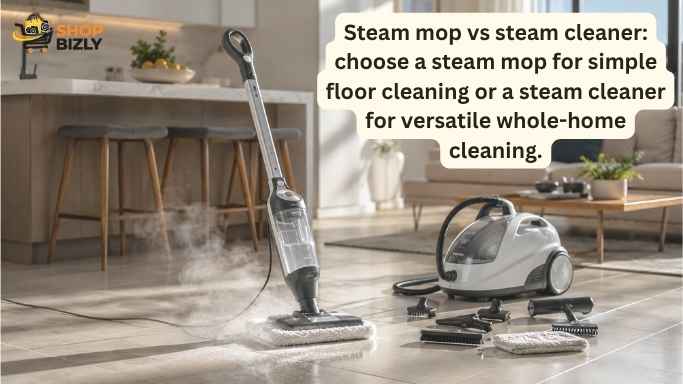
A steam mop can quickly cover large areas of tile flooring. Its wide cleaning head makes it convenient for kitchens, hallways, and living spaces.
However, the real advantage of a steam cleaner appears when you move from the tile surface to the grout lines.
A steam cleaner with a concentrated nozzle or grout brush can direct steam into smaller areas that a flat steam-mop head cannot reach easily.
Steam Mop for Tile
Choose a steam mop when:
- Most of the mess is on the floor surface.
- You want fast everyday cleaning.
- You don’t need many attachments.
- You prefer a lightweight appliance.
- You want simple operation.
Steam Cleaner for Tile and Grout
Choose a steam cleaner when:
- Grout is a major cleaning problem.
- You want to clean bathroom surfaces.
- You need concentrated steam.
- You want one appliance for several household tasks.
For sealed ceramic and porcelain tile, steam can be particularly useful for loosening grime. But cracked grout, damaged surfaces, or unsealed materials require more caution.
And remember: steam is not automatically safe simply because a surface is called “tile.” Always check the surface manufacturer’s care instructions.
Steam Mop vs Steam Cleaner for Hardwood Floors
Hardwood is where you should slow down before turning on any steam appliance.
The important word is sealed.
Some steam mop manufacturers specifically approve their products for certain sealed hardwood floors. For example, BISSELL states that its PowerFresh Deluxe can be used on certain sealed hardwood surfaces while also telling users to review the product guide and flooring manufacturer’s instructions.
That does not mean every hardwood floor is steam-safe.
The finish, construction, seams, moisture exposure, and manufacturer’s care instructions all matter.
When Steam May Be Appropriate
A steam mop may be suitable when:
- Your floor manufacturer permits steam cleaning.
- The floor is properly sealed.
- Your particular steam mop is approved for the surface.
- You use the recommended steam setting.
- You follow the manufacturer’s instructions.
When You Should Avoid Steam
Be cautious if:
- The floor is unsealed.
- The finish is damaged.
- The manufacturer says not to use steam.
- You notice moisture entering seams.
- You are unsure whether the flooring is compatible.
This is one of the biggest misconceptions in the steam mop vs. steam cleaner debate:
A more powerful steam cleaner is not automatically better for hardwood.
More heat and moisture can actually increase the risk if the surface isn’t designed for it.
Can You Use a Steam Mop on Vinyl?
This question deserves a careful answer because there is no universal “yes” or “no.”
Some manufacturers allow steam cleaning on specific vinyl products or with specific steam mop models. Others specifically discourage it.
For example, Armstrong Flooring says it discourages introducing heat and moisture to its vinyl flooring and recommends checking with the steam-mop manufacturer if you are considering steam cleaning.
On the other hand, Shark lists sealed vinyl among the compatible surfaces for its SteamSpot Steam Mop model.
So the safest answer to “Can you use a steam mop on vinyl?” is:
Only if both your flooring manufacturer and the specific steam mop manufacturer allow it.
Don’t assume that because one vinyl floor is steam-safe, every vinyl floor is.
If steam is approved, start with the manufacturer’s recommended setting and avoid leaving the hot mop stationary in one location.
If steam is not approved, use the recommended vinyl-floor cleaning method instead.
For more detailed floor-care information, you can also read [how to clean vinyl floors] on your site.
How to Use a Steam Mop Correctly
Knowing how to use steam mop equipment correctly is just as important as choosing the right machine.
A steam mop is not simply a regular mop with hot water. The cleaning process works best when you prepare the floor first.
Step 1: Remove Loose Dirt
Vacuum or sweep the floor before steaming.
Hair, crumbs, sand, and loose dirt can otherwise become trapped in the microfiber pad.
Step 2: Check the Floor
Before steaming, confirm that the floor is approved for your specific steam mop.
This is especially important for hardwood, laminate, vinyl, painted surfaces, and other moisture-sensitive materials.
Step 3: Fill the Water Tank
Use the type of water recommended in your owner’s manual.
Some manufacturers recommend distilled or demineralized water to reduce mineral buildup. For example, BISSELL recommends distilled water for certain steam mop models.
Step 4: Attach a Clean Microfiber Pad
A dirty pad can spread residue instead of collecting it.
For a better result, begin with a clean pad and replace or wash it when it becomes heavily soiled.
Step 5: Allow the Mop to Heat
Don’t rush this stage.
Wait until the machine indicates that it is ready according to the manufacturer’s instructions.
Step 6: Start With the Lowest Suitable Steam Setting
If your machine offers multiple settings, don’t automatically use maximum steam.
Start with the level recommended for your flooring.
Step 7: Keep the Mop Moving
Never leave a hot steam mop sitting in one place for an extended period.
Move steadily across the floor and pay attention to seams, edges, and areas where moisture could accumulate.
Step 8: Wash the Pad
After cleaning, remove and wash the microfiber pad according to the care instructions.
Do not store the machine with a wet, dirty pad attached.
If you want to compare a specific model for this type of cleaning, you can internally link to [DEVOAC VM6 steam mop] here.
Steam Cleaner: When Is It the Better Choice?
A steam cleaner becomes much more attractive when your cleaning problems go beyond floors.

Check the Latest Price on AliExpress
Imagine you want to clean:
- Tile grout
- Shower doors
- Bathroom corners
- Kitchen surfaces
- Window glass
- Upholstery
- Hard-to-reach cracks
- Appliance edges
- Other compatible surfaces
A dedicated steam mop may not have the right tools.
A multi-purpose steam cleaner can come with specialized attachments that allow you to direct steam exactly where it is needed.
That is the main reason a steam cleaner can justify its larger size and higher price.
What About a 2-in-1 Steam Mop?
This is where things get interesting.
Some modern machines blur the line between a steam mop and a steam cleaner.
For example, BISSELL’s PowerFresh Slim is designed as a 3-in-1 machine that can function as a steam mop and handheld steam device, with tools for additional cleaning tasks.
This type of design may be ideal if you want:
The convenience of a steam mop + the versatility of a steam cleaner.
If you are searching for the best steam cleaner, however, don’t choose based only on the number of accessories in the box.
Look at:
- Steam control
- Water tank capacity
- Heat-up time
- Hose length
- Attachment quality
- Floor compatibility
- Warranty
- Replacement pads and accessories
- Manufacturer support
Pros & Cons of a Steam Mop
Pros
- Easy to operate
- Designed specifically for floors
- Lightweight compared with many canister cleaners
- Quick setup
- Compact storage
- Good for regular hard-floor cleaning
- Uses steam instead of traditional cleaning solutions
- Microfiber pads collect loosened dirt
Cons
- Limited beyond-floor versatility
- Smaller water tanks on many models
- Not automatically safe for every floor
- Usually fewer attachments
- Not ideal for detailed grout or above-floor cleaning
Pros & Cons of a Steam Cleaner
Pros
- Multi-surface versatility
- Useful for grout and tight spaces
- Can clean many compatible bathroom and kitchen surfaces
- Multiple attachments
- Some models offer stronger or more concentrated steam
- Can replace several small cleaning tools
Cons
- Usually larger
- More expensive in many cases
- More setup
- More attachments to store
- Can have a learning curve
- Not every attachment is safe for every surface
Steam Mop Cleaning Tips for Better Results
Good technique can make a basic steam mop perform much better.
1. Vacuum First
Steam is not a replacement for removing loose dirt.
2. Change Pads Regularly
A saturated pad cannot collect dirt efficiently.
3. Don’t Use Excessive Steam
More steam doesn’t automatically mean cleaner floors.
4. Follow the Floor Manufacturer
This is especially important for vinyl, laminate, hardwood, and specialty flooring.
5. Keep the Mop Moving
Avoid prolonged heat exposure in one location.
6. Don’t Add Cleaning Chemicals Unless Approved
Many steam appliances are designed to operate with water only. Adding detergent, vinegar, essential oils, or other substances without manufacturer approval can damage the machine or create unwanted residue.
7. Clean the Machine
Empty the tank after use when recommended and follow the manufacturer’s maintenance instructions.
8. Replace Worn Pads
Old microfiber pads may stop absorbing effectively and can leave streaks.
Common Steam Cleaning Mistakes
Even an excellent steam mop can cause problems when used incorrectly.
Mistake 1: Steaming an Unapproved Floor
Never assume “hard floor” automatically means steam-safe.
Mistake 2: Ignoring Manufacturer Instructions
Your steam mop manual and flooring care guide should take priority over generic internet advice.
Mistake 3: Using Maximum Steam Everywhere
Different surfaces have different moisture and heat tolerances.
Mistake 4: Skipping Vacuuming
Steam won’t magically remove piles of loose dirt.
Mistake 5: Using a Dirty Pad
A dirty pad can transfer grime from one room to another.
Mistake 6: Leaving the Mop Stationary
Concentrated heat and moisture can create unnecessary risk.
Mistake 7: Adding Unapproved Solutions
Steam appliances are not automatically compatible with every cleaning chemical.
Mistake 8: Expecting Steam to Replace Deep Carpet Cleaning
A carpet glider or steam attachment may refresh a carpet, but that doesn’t necessarily make it equivalent to a dedicated carpet extractor.
Which One Should You Buy?
The answer becomes simple when you think about your actual cleaning routine.
Choose a Steam Mop If:
- Your main priority is floors.
- You have lots of tile or compatible sealed hard floors.
- You want quick everyday cleaning.
- You prefer something lightweight.
- You don’t need multiple attachments.
- You want simple operation.
A model such as a Shark Steam Mop can make sense for someone who mainly wants a dedicated floor-cleaning appliance.
Choose a Steam Cleaner If:
- You want to clean more than floors.
- Grout is a major concern.
- You frequently clean bathrooms.
- You want attachments for detailed cleaning.
- You want one machine for multiple household tasks.
Choose a hybrid/2-in-1 if:
You want the convenience of a steam mop but don’t want to give up above-floor cleaning.
This category can be particularly interesting for homeowners who don’t have enough storage space for several cleaning appliances.
Steam Mop vs Steam Cleaner: Final Verdict
So, which wins the steam mop vs. steam cleaner battle?

There isn’t one winner for everyone.
If your priority is fast, simple floor cleaning, I’d choose a steam mop.
If your priority is whole-home versatility, I’d choose a steam cleaner.
And if you want both, a good 2-in-1 model may offer the best compromise.
The most important point is not to buy based on steam temperature, accessory count, or marketing claims alone.
Start with your floors.
Ask yourself:
What surfaces do I actually need to clean?
If the answer is mostly floors, a steam mop is probably enough.
If your answer includes grout, bathroom surfaces, upholstery, windows, kitchen areas, and hard-to-reach places, a steam cleaner is likely the more useful investment.
And regardless of which machine you choose, always verify compatibility with the surface manufacturer’s instructions. Steam is powerful—but the wrong surface can turn that cleaning power into a costly mistake.
Frequently Asked Questions
1. Are steam cleaners better than mopping?
For some cleaning jobs, yes. Steam cleaners can provide heat-based cleaning and can be more versatile than a traditional mop. However, they do not automatically replace sweeping, vacuuming, or every type of floor-care method. The best choice depends on the surface and the type of dirt you’re dealing with. Consumer Reports notes that steam mops can loosen grime while microfiber pads collect it, using less water than traditional mop-and-bucket cleaning.
2. What are the disadvantages of using a steam mop?
The biggest disadvantages are limited versatility, possible floor compatibility issues, smaller water tanks on some models, and the need to maintain microfiber pads. Steam mops are also not suitable for every flooring material. Always check the manufacturer’s instructions before use.
3. Is there a difference between a steamer and a steam cleaner?
The terms are sometimes used interchangeably, but in household cleaning, a steam cleaner usually refers to a machine designed to clean multiple surfaces using steam and different attachments. A steam mop is more specialized for floors. Which? describes steam mops as a more limited type of steam cleaner focused primarily on hard floors.
4. Is a steam cleaner better than a mop and bucket?
It can be better for certain jobs because steam can loosen grime while a microfiber pad collects the loosened dirt, and it generally uses less water than traditional mopping. But a mop and bucket remains inexpensive, familiar, and suitable for many surfaces. The right choice depends on your flooring and cleaning needs.
5. Which is better: a steam mop vs. a steam cleaner for tile and hardwood floors?
For large areas of compatible tile or sealed hardwood, a steam mop is usually easier and faster to maneuver. A steam cleaner is more useful if you also want to clean grout and other surfaces. For hardwood, however, compatibility is critical—use steam only when your flooring manufacturer and the specific appliance manufacturer permit it.
EEAT Signals to Add to This Article
For stronger EEAT, don’t make this article look like a generic affiliate comparison.
Add these elements in WordPress:
- Mention that floor compatibility was checked against manufacturer guidance.
- Link to official manufacturer instructions where appropriate.
- Clearly distinguish personal experience from manufacturer claims.
- Avoid saying every steam mop is safe for every floor.
- Include a comparison table based on actual appliance design.
- Add an editorial disclosure if the page contains affiliate links.
- Update the article when major steam mop models or manufacturer recommendations change.
- If you personally test a model, add original photos and specific observations.
A strong EEAT sentence you can add after your introduction:
Editorial note: Floor-care recommendations in this guide are based on manufacturer guidance and current product information. Because flooring materials and finishes vary, always check both the appliance manual and your flooring manufacturer’s care instructions before using steam.
Conclusion
The steam mop vs. steam cleaner decision is easier than it first appears.
If you mainly need to clean compatible hard floors, a steam mop is usually the more convenient option. It is simple, lightweight, easy to store, and designed around one job: floor cleaning.
If you want to clean grout, bathroom surfaces, kitchen areas, upholstery, windows, and other compatible surfaces, a multi-purpose steam cleaner gives you much more flexibility.
But don’t make your decision based only on “more powerful steam.”
The best steam cleaning machine is the one that matches your surfaces and your cleaning routine.
For tile, a steam mop can be excellent for everyday floor cleaning, while a steam cleaner may have the advantage when grout and detailed areas are involved.
For hardwood and vinyl, the decision requires more caution. Always check the flooring manufacturer’s instructions as well as the steam appliance manufacturer’s guidance. Some manufacturers approve steam for specific sealed surfaces, while others specifically discourage it.
So if you want a quick answer:
Mostly floors? Choose a steam mop.
Floors + grout + multiple surfaces? Choose a steam cleaner.
Want both? Consider a quality 2-in-1 model.
That is the simplest way to win the steam mop vs. steam cleaner debate without buying more cleaning equipment than you actually need.
Also Product