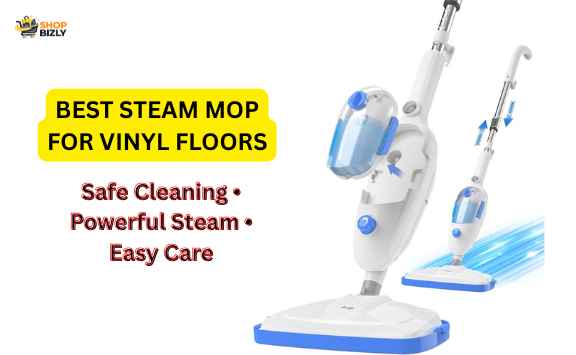
Best Steam Mop for Vinyl Floors: Safe Picks, Buying Guide & Cleaning Tips (2026)
If you have vinyl floors, you already know how quickly they can show footprints, pet messes, kitchen spills, and everyday dirt. A regular mop can handle routine cleaning, but a steam mop sounds tempting because it uses heated water instead of relying heavily on cleaning chemicals.
But there is an important catch: not every vinyl floor is designed to handle steam.
Some vinyl flooring manufacturers specifically advise against steam cleaning, while others approve steam cleaning for certain collections or products. Consumer Reports also notes that most vinyl floors can tolerate steam but recommends checking the flooring and steam mop instructions before using one.
That makes choosing the best steam mop for vinyl floors a little different from simply buying the hottest or most powerful model.
In this guide, we look at what actually matters: steam control, microfiber pads, heat exposure, cleaning performance, maneuverability, and—most importantly—whether your specific vinyl flooring is approved for steam.
Quick answer: The best steam mop for vinyl floors is one that your flooring manufacturer explicitly allows you to use, has controlled steam output, has a soft microfiber pad, and does not leave excessive moisture behind. If your flooring warranty says “no steam,” choose a quality microfiber or spray mop instead.
Best Steam Mop for Vinyl Floors Table of Contents
- Can You Use a Steam Mop on Vinyl Flooring?
- What Makes a Steam Mop Good for Vinyl Floors?
- Best Steam Mop for Vinyl Floors: What to Look For
- Steam Mop Comparison for Vinyl Flooring
- How to Use a Steam Mop on Vinyl Floors Safely
- Steam Mop vs. Traditional Mop for Vinyl Floors
- Common Mistakes That Can Damage Vinyl Floors
- Final Verdict: Is a Steam Mop Right for Your Vinyl Floor?
- Pros & Cons
- Frequently Asked Questions
Can You Use a Steam Mop on Vinyl Flooring?
The answer is sometimes—not automatically.
Vinyl flooring is a broad category. Luxury vinyl plank (LVP), luxury vinyl tile (LVT), sheet vinyl, and different multilayer vinyl products can have different construction and manufacturer care instructions.
Consumer Reports says the majority of vinyl flooring is safe for steam mops, but it also warns that vinyl contains plastic and backing materials that can be susceptible to heat. Its recommendation is to check the steam mop manual and the flooring manufacturer’s instructions before cleaning.
There is another reason to be careful: warranties.
For example, Karndean’s current care guidance says steam mops are not recommended on its vinyl flooring.
On the other hand, some COREtec collections specifically identify certain styles as approved for steam mop cleaning. COREtec also recommends checking the specifications because approval does not necessarily apply to every collection.
So before buying any steam mop, check these two things:
- Your vinyl flooring manufacturer’s care guide
- The specific steam mop manufacturer’s approved floor list
If either one says, “Do not use steam,” don’t use it.
For readers comparing flooring-friendly cleaning methods, our guide to [Best Steam Mop for Vinyl Plank Floors (2026)] can help you understand the differences between LVP and other hard-floor surfaces.
What Makes a Steam Mop Good for Vinyl Floors?
A good steam mop for vinyl flooring isn’t necessarily the one that produces the most steam.
In fact, excessive heat and moisture are exactly what you want to control.
Check the Latest Price on AliExpress
Best Steam Mop for Vinyl Floors
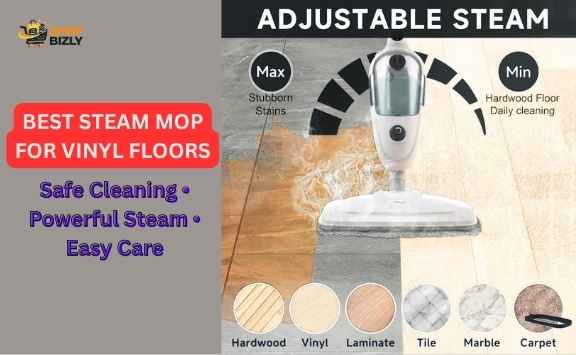
1. Adjustable Steam Control
A variable steam setting is one of the most useful features.
It allows you to use less steam for routine cleaning rather than blasting the floor continuously with maximum heat.
For vinyl floors that are approved for steam cleaning, controlled output gives you more flexibility and reduces unnecessary moisture.
2. Soft Microfiber Pads
The cleaning pad is just as important as the steam.
A soft microfiber pad can pick up loosened dirt while reducing the risk of scratching the surface.
Consumer Reports has also found that different pad textures can affect cleaning performance, with rougher pads performing better on certain stains.
However, for vinyl flooring, don’t assume that an aggressive scrub pad is automatically better. Always follow your floor manufacturer’s recommendations.
3. Fast Drying
You don’t want your vinyl floor soaking wet after cleaning.
A steam mop that delivers controlled steam and leaves relatively little residual moisture is preferable.
This is especially important around seams, edges, transitions, and areas where flooring may have imperfect installation.
4. Swivel Steering
Vinyl flooring is often installed throughout kitchens, hallways, living rooms, and bedrooms.
A swivel head makes it easier to clean around:
- Kitchen islands
- Dining chairs
- Sofa legs
- Cabinets
- Narrow hallways
- Bathroom fixtures
A lightweight mop that turns easily can save more effort than a feature-heavy model that is difficult to maneuver.
5. Easy-to-Wash Pads
For everyday cleaning, you’ll probably use microfiber pads frequently.
Having washable, reusable pads is more convenient and can reduce ongoing consumable costs.
Best Steam Mop for Vinyl Floors: What to Look For
Before choosing a model, consider your actual cleaning situation rather than the number of accessories included.
Best Overall Type: Controlled-Steam Floor Mop
For vinyl floors that are officially approved for steam cleaning, a simple floor-focused steam mop with adjustable output is usually the most sensible design.
You don’t necessarily need a huge collection of attachments.
The important combination is
- Controlled steam
- Soft microfiber pad
- Lightweight design
- Swivel head
- Easy water filling
- Reasonable cleaning path
- Short drying time
Best for Homes With Multiple Floor Types
If your home has vinyl plus tile or other approved sealed hard floors, a multi-surface steam mop can be useful.
Just remember that “multi-surface” doesn’t automatically mean “safe for every vinyl floor.”
Check the flooring manufacturer’s instructions for each surface.
Best Steam Mop With Attachments
A model with attachments can be useful if you want to clean more than floors.
The PurSteam 10-in-1 Steam Mop is one example frequently discussed in steam-mop roundups because of its broad accessory selection. The Spruce has previously highlighted PurSteam’s versatility and multiple attachments in its steam-mop testing.
However, attachments should not distract from the main question: Is your vinyl flooring approved for steam?
Best Steam Mop for Vinyl Floors: What About Bissell PowerFresh?
The Bissell PowerFresh Steam Mop is a popular search term and appears frequently in steam mop comparisons.
Consumer Reports currently lists Bissell PowerFresh 1940 and PowerFresh Deluxe 1806 among its steam mop ratings.
However, there’s a critical detail many buying guides overlook.
Bissell’s current product information says the PowerFresh Deluxe 1806 is not intended for use with vinyl flooring, and the PowerFresh 1940 carries the same warning.
So although “Bissell PowerFresh” has strong search interest, I would not recommend automatically choosing it for vinyl floors.
That’s exactly why checking the manufacturer’s current documentation matters more than simply following a popular product list.
Best Steam Mop for Vinyl Floors: Steam Mop Comparison for Vinyl Flooring
| Steam Mop Type / Model | Vinyl Consideration | Best For | Key Point |
|---|---|---|---|
| Controlled-steam mop | Depends on flooring approval | Approved vinyl floors | Best balance of control |
| PurSteam 10-in-1 | Verify floor compatibility. | Multiple cleaning tasks | Many attachments |
| Bissell PowerFresh 1940 | Not intended for vinyl | Other approved sealed floors | Popular but not a vinyl pick |
| Bissell PowerFresh Deluxe 1806 | Not intended for vinyl | Sealed hard floors approved by Bissell | Strong cleaning features |
| Shark steam mop | Check model and flooring instructions. | General hard-floor cleaning | Compatibility varies. |
| Cordless steam mop | Check manufacturer approval. | Convenience | Less cord management |
Consumer Reports’ current steam-mop ratings include models from Bissell, Shark, Black+Decker, Kenmore, PurSteam, Kärcher, and others. Its testing evaluates cleaning, steam rate, convenience, runtime, and related factors.
That is useful because “best” should not be determined by brand popularity alone.
How to Use a Steam Mop on Vinyl Floors Safely
If your specific vinyl flooring and steam mop are both approved for steam cleaning, technique still matters.
Step 1: Vacuum or Sweep First
Don’t steam over loose sand, grit, hair, or food particles.
Sweeping or vacuuming first removes abrasive debris that could otherwise move across the floor under the mop pad.
For general floor-care advice, our article [How to Clean Laminate Floors Without Damage] also covers the importance of removing loose debris before wet cleaning.
Step 2: Use a Clean Microfiber Pad
A dirty pad can simply redistribute grime.
Start with a clean pad and change it when it becomes visibly dirty.
Step 3: Start With the Lowest Suitable Steam Setting
If your mop has adjustable steam, begin conservatively.
You can increase the output only if the floor manufacturer’s instructions allow it and the cleaning result requires it.
Step 4: Keep the Mop Moving
Don’t leave a steaming mop sitting in one place.
Move continuously and use smooth passes.
The objective is to loosen dirt and lift it with the microfiber pad—not to heat one section of flooring for an extended period.
Step 5: Watch the Floor
Stop immediately if you notice:
- Excessive moisture
- Surface changes
- Curling edges
- Adhesive problems
- Discoloration
- Unusual bubbling
- Separation around seams
When in doubt, stop and return to the flooring manufacturer’s recommended cleaning method.
Step 6: Let the Floor Dry
Even when steam cleaning is approved, allow the surface to dry before heavy foot traffic.
Steam Mop vs. Traditional Mop for Vinyl Floors
A steam mop isn’t automatically better than a traditional mop.
It depends on the floor and the type of dirt you’re trying to remove.

Check the Latest Price on AliExpress
Steam Mop
Advantages:
- Uses heated water
- Can loosen some dried-on messes
- Doesn’t require a bucket
- Can be convenient for frequent cleaning
- Some models offer adjustable steam
Disadvantages:
- Not approved for every vinyl floor
- Heat can be a concern
- Some models leave excess moisture
- Replacement pads are still necessary
- Incorrect use can create flooring problems
Consumer Reports found that steam mops can outperform traditional approaches on some messes, but results vary considerably by model and type of stain. Its testing has found steam mops generally more successful with certain stains such as coffee, mustard, and ketchup than very sticky messes such as jam.
Traditional Microfiber Mop
A microfiber or spray mop is often the safer default when the flooring manufacturer doesn’t approve steam.
It gives you more direct control over the amount of moisture and cleaning solution.
For many vinyl floors, that simplicity is an advantage.
Common Mistakes That Can Damage Vinyl Floors
Mistake #1: Assuming Waterproof Means Steam-Proof
This is one of the biggest misunderstandings.
A floor can be marketed as waterproof without being approved for steam cleaning.
Water resistance and heat resistance are not exactly the same thing.
Mistake #2: Ignoring the Flooring Warranty
Always check your specific floor.
A generic “vinyl flooring is safe with steam” statement is not enough.
Your particular manufacturer may say otherwise.
Mistake #3: Using Maximum Steam
More steam doesn’t necessarily mean better cleaning.
For approved vinyl floors, use the lowest effective setting recommended by the manufacturer.
Mistake #4: Leaving the Mop Stationary
Heat concentrated in one location can create unnecessary risk.
Keep the mop moving.
Mistake #5: Adding Random Cleaning Chemicals
Steam mops generally aren’t designed for household cleaners being poured into the water tank unless the manufacturer specifically says they can be used.
Consumer Reports notes that adding chemicals can damage a steam mop or create safety and warranty concerns.
Mistake #6: Using Tap Water Without Checking the Manual
Mineral buildup can affect steam-mop performance.
For example, Bissell recommends distilled water for several PowerFresh models to help prevent mineral buildup.
Always follow the water instructions for your exact model.
Mistake #7: Believing “Sanitizing” Means the Floor Is Automatically Disinfected
Steam can reduce certain microorganisms under controlled conditions, but performance depends on temperature, contact time, surface, pad, and technique.
Consumer Reports has also examined the limitations behind steam-mop sanitizing claims.
Helpful Tips for Better Vinyl Floor Cleaning
Here are a few simple habits that can make a bigger difference than buying an expensive mop.
Clean High-Traffic Areas More Often
Kitchen entrances, hallways, and areas around pet bowls usually collect dirt faster.
Spot-cleaning these areas can prevent heavy buildup.
Change Pads Frequently
A clean pad is much more effective than dragging yesterday’s dirt across today’s floor.
Don’t Chase Maximum Heat
The goal is clean flooring, not maximum steam output.
Check Your Floor Before You Buy
This should be your first step—not the last.
Search your flooring manufacturer’s website for terms such as
- Steam mop
- Steam cleaning
- Vinyl floor care
- LVP maintenance
- LVT maintenance
- Warranty cleaning instructions
Use Manufacturer Documentation as the Final Authority
Independent testing is useful for comparing cleaning performance.
But your flooring manufacturer determines what cleaning methods are appropriate for your specific product.
For additional independent testing information, see [Consumer Reports steam mop ratings and reviews]. Consumer Reports currently maintains ratings for dozens of steam mop models and explains its testing methods.
Pros & Cons of Using a Steam Mop on Vinyl Floors
Pros
- Can loosen some stubborn dried-on dirt
- Convenient compared with carrying a bucket
- Uses heated water
- Many models use reusable microfiber pads
- Adjustable-steam models offer better control
- Useful on other approved hard-floor surfaces
Cons
- Not suitable for every vinyl floor
- May conflict with flooring warranty instructions
- Excess heat can be risky
- Incorrect use can cause damage
- Popular models aren’t necessarily vinyl-safe
- Steam doesn’t replace regular sweeping or vacuuming
EEAT: What You Should Know Before Buying
There is a reason this guide doesn’t simply name a random “#1 steam mop.”
A trustworthy recommendation should distinguish between:
- Independent product testing
- Manufacturer specifications
- Flooring manufacturer’s care instructions
- Real-world cleaning needs
Consumer Reports’ 2026 testing shows that steam-mop performance varies significantly between models. It has tested more than two dozen models and evaluates cleaning ability, steam production, convenience, runtime, and other factors.
At the same time, flooring manufacturers can disagree about steam cleaning. Karndean recommends avoiding steam on its vinyl floors, while COREtec identifies certain collections that are approved for steam cleaning.
That difference is important.
The best steam mop for vinyl floors is not necessarily the most powerful steam mop. It’s the one that is compatible with your flooring and gives you enough control to clean without excessive heat or moisture.
Frequently Asked Questions
1. Can I use a steam mop on vinyl flooring?
Sometimes. Many vinyl floors can tolerate steam, but not all are approved for it. Consumer Reports recommends checking your flooring manufacturer’s instructions and the steam mop manufacturer’s manual before use.
2. Do steam mops work on vinyl?
They can work effectively on vinyl flooring that is specifically approved for steam cleaning. However, steam performance and floor compatibility are separate questions. Always follow the flooring manufacturer’s care instructions.
3. What type of mop is best for vinyl floors?
A microfiber or spray mop is the safest general choice when steam cleaning is not approved. If your flooring manufacturer specifically allows steam, a controlled-steam mop with a soft microfiber pad can be a convenient option.
4. Why are my vinyl floors still dirty after mopping?
Several things can cause this. You may be mopping without vacuuming first, using a dirty pad, leaving behind cleaning residue, or not using enough mechanical agitation for sticky spots. Steam can loosen some stains, but it doesn’t magically remove every type of soil.
5. Is a cordless steam mop better for vinyl floors?
Not necessarily. Cordless operation improves convenience, but compatibility with the flooring is much more important. A cordless model is only a better choice if its manufacturer approves your floor and its steam output meets your cleaning needs.
Final Verdict: What Is the Best Steam Mop for Vinyl Floors?
If you’re searching for the best steam mop for vinyl floors, don’t start with the brand.
Start with your flooring.
Check the exact manufacturer and product collection. If steam cleaning is approved, choose a mop with controlled steam, a soft microfiber pad, good maneuverability, and minimal residual moisture.
If steam is prohibited, don’t take the risk just because a popular review says a particular steam mop is excellent.
This is also why the popular Bissell PowerFresh Steam Mop deserves a closer look before purchase. Consumer Reports rates Bissell PowerFresh models, but Bissell’s current product information says its PowerFresh 1940 and PowerFresh Deluxe 1806 are not intended for vinyl flooring.
For readers whose flooring is officially steam-safe, a controlled-steam model can make everyday cleaning faster and more convenient.
For everyone else, a quality microfiber or spray mop is often the smarter—and safer—investment.
The bottom line is simple:
Choose the mop that matches your floor, not the floor that matches the mop.
Also Product