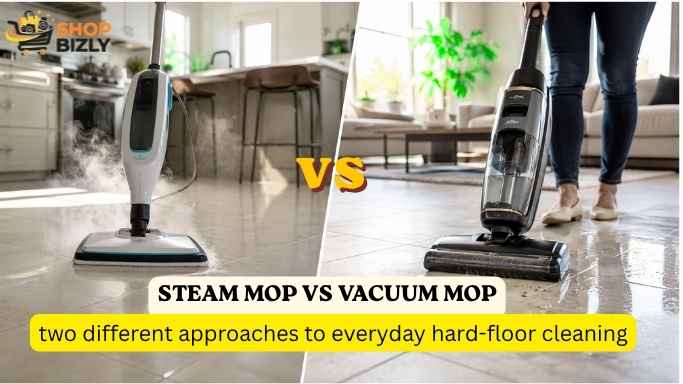
Steam Mop vs Vacuum Mop: Which Is the Best Choice for Your Floors?
Choosing between a steam mop and a vacuum mop can be surprisingly confusing. Both are designed to make floor cleaning easier, but they solve different problems.
Featured Snippet Paragraph
A vacuum mop is generally better for everyday floor cleaning because it can pick up dry debris and mop wet messes in one process. A steam mop is better for loosening stubborn grime on flooring that is specifically approved for steam cleaning. For hardwood and laminate, always check the flooring manufacturer’s instructions before using steam because heat and moisture may cause damage.
A steam mop uses heated water to produce steam that loosens grime and helps clean suitable hard-floor surfaces. A vacuum mop, often called a wet-dry vacuum or vacuum mop combo, combines floor pickup and mopping in one machine. That means it can collect crumbs, dust, pet hair, and wet messes while also cleaning the floor.
So, which one should you buy?
For dried-on grime and steam-based cleaning on compatible surfaces, a steam mop can be very useful. For everyday cleaning where you want to vacuum and mop in one pass, a vacuum mop is usually more versatile.
But the answer changes depending on your flooring, cleaning habits, pets, spills, and whether you prioritize deep cleaning or convenience.
In this guide, we’ll compare steam mop vs. vacuum mop in practical terms, including tile, hardwood, laminate, and vinyl floors. We’ll also look at cleaning performance, moisture, maintenance, convenience, and the situations where one type makes more sense than the other.
Quick answer: A steam mop is generally better for loosening stubborn grime on compatible sealed floors, while a vacuum mop is better for everyday cleaning because it can pick up dry debris and wash the floor in one process. Neither is automatically better for every floor or every home.
Steam Mop vs. Vacuum Mop Table of Contents
- What Is a Steam Mop?
- What Is a Vacuum Mop?
- Steam Mop vs Vacuum Mop: Key Differences
- Steam Mop vs. Vacuum Mop Comparison Table
- Steam Mop vs. Vacuum Mop for Tile
- Steam Mop vs. Vacuum Mop for Hardwood Floors
- Steam Mop vs. Vacuum Mop for Laminate Floors
- Steam Mop vs. Vacuum Mop for Vinyl Floors
- Which Is Better for Everyday Cleaning?
- What Are the Disadvantages of Using a Steam Mop?
- What Is the Healthiest Way to Mop Floors?
- Pros and Cons
- Helpful Tips and Common Mistakes
- FAQ
- Final Verdict
What Is a Steam Mop? Steam Mop vs. Vacuum Mop
A steam mop is a floor-cleaning appliance that heats water inside a tank and produces steam. The steam is delivered through the mop head, where a microfiber pad or similar cleaning surface helps lift loosened dirt.
Unlike a traditional mop and bucket, a steam mop does not require a large amount of standing water on the floor. Consumer Reports notes that steam mops can use less water than traditional mopping and can help loosen dirt and grime with heat.
That makes a steam mop particularly attractive when you are dealing with:
- Dried food spills
- Sticky marks
- Kitchen grime
- Surface dirt
- Areas that need frequent spot cleaning
- Suitable sealed hard floors
However, steam is not automatically safe for every floor.
This is one of the most important points to understand before buying the best steam mop for your home.
Flooring manufacturers can have different care requirements, and steam can potentially damage some materials or finishes. Consumer Reports specifically warns against using steam mops on wood floors because heat and moisture may contribute to warping or damage.
So the right question isn’t simply, “Does steam clean better?”
The better question is
Is steam appropriate for my particular floor?
What Is a Vacuum Mop? Steam Mop vs.. Vacuum Mop
A vacuum mop combines two cleaning functions: vacuuming and mopping.
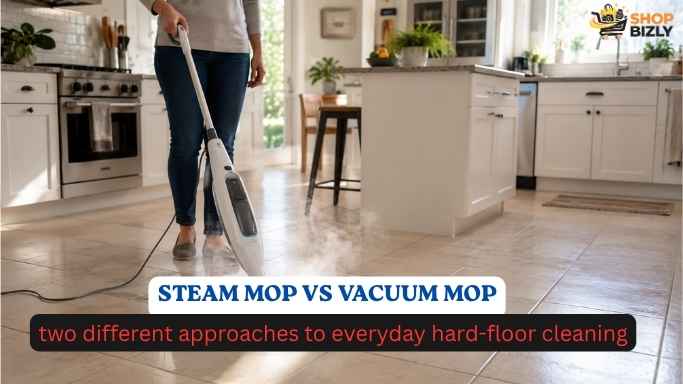
Instead of first vacuuming loose debris and then using a mop, a vacuum mop combo can often collect dry debris while simultaneously washing the floor.
This is especially useful for homes with:
- Pets
- Children
- Frequent food spills
- Kitchen messes
- High-traffic floors
- Crumbs and hair
- Everyday wet and dry messes
A typical wet-dry vacuum mop has a brush roll, a clean-water tank, a dirty-water tank, and a suction system. Some models also have self-cleaning functions or different cleaning modes.
The biggest advantage is convenience.
Imagine breakfast crumbs, spilled juice, and muddy footprints appearing in the kitchen. With a traditional setup, you might need a vacuum, broom, and mop.
A vacuum mop can potentially handle much of that work in one cleaning session.
That’s why searches for the best vacuum mop combo and the best steam mop vacuum combo are becoming increasingly interesting for people looking for an all-in-one floor-cleaning solution.
Steam Mop vs. Vacuum Mop: Key Differences
The biggest difference comes down to what each machine is designed to remove.
A steam mop is primarily a steam-based floor cleaner.
A vacuum mop is primarily a debris pickup and wet-cleaning machine.
Steam Mop
A steam mop is strongest when you already have a relatively clean floor but need to deal with stuck-on surface grime.
For example, if your kitchen floor has dried sauce or sticky footprints, steam can help loosen that residue so the microfiber pad can pick it up.
But you generally shouldn’t expect a steam mop to replace a vacuum.
Pet hair, cereal pieces, crumbs, and larger debris should usually be removed before steam mopping.
Vacuum Mop
A vacuum mop is more of an everyday maintenance tool.
It can be especially convenient when your floor regularly collects:
- Dust
- Crumbs
- Hair
- Pet hair
- Small food particles
- Liquid spills
Instead of vacuuming first and mopping second, a wet-dry machine can combine those jobs.
That convenience is one reason the broader vacuum mop combo category has become so popular.
Steam Mop vs. Vacuum Mop Comparison Table
| Feature | Steam Mop | Vacuum Mop |
|---|---|---|
| Main purpose | Steam cleaning and mopping | Vacuuming + wet mopping |
| Picks up dry debris | Limited | Yes. |
| Handles wet spills | Limited | Yes. |
| Uses steam | Yes. | Usually no |
| Best for dried grime | Excellent on compatible floors | Good |
| Pet hair | Not ideal | Very good |
| Crumbs | Not ideal | Very good |
| Everyday cleaning | Good | Excellent |
| Deep surface cleaning | Very good on compatible floors | Good to very good |
| Water management | Small tank | Clean + dirty water tanks |
| Maintenance | Usually simpler | Usually more maintenance |
| Hardwood compatibility | Must follow flooring/manufacturer guidance | Usually better suited when the manufacturer permits wet cleaning |
| Laminate compatibility | Use caution. | Check manufacturer instructions. |
| Tile | Very useful on suitable tile | Excellent |
| Convenience | High | Very high |
The exact performance varies by model, floor type, and manufacturer instructions.
Steam Mop vs. Vacuum Mop for Tile
If you have ceramic or porcelain tile, a steam mop can be an attractive choice because tile itself is generally resistant to heat and moisture.
Steam can help loosen grime around textured tile surfaces and make sticky residue easier to remove.
However, the grout deserves attention.
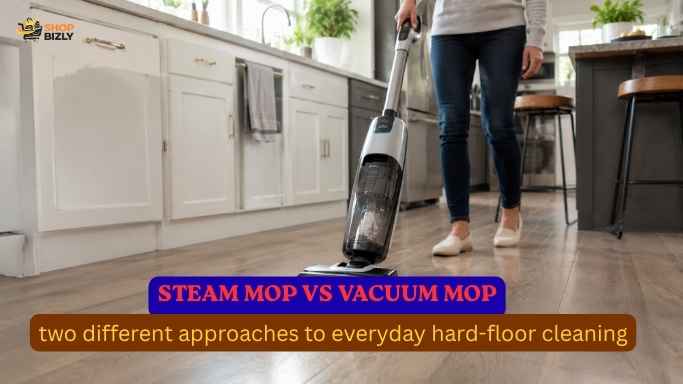
Consumer Reports notes that although ceramic and porcelain tile can tolerate steam, grout may be more sensitive to repeated hot moisture exposure.
A vacuum mop can also be excellent for tile because it can pick up loose debris while washing the surface.
Steam Mop vs Vacuum Mop Which Is Better for Tile?
For stubborn surface grime: Steam mop.
For crumbs, pet hair, and everyday wet messes: Vacuum mop.
For a large kitchen where food spills happen every day, a vacuum mop may be more convenient.
For occasional deep cleaning of suitable tile, a steam mop can be very useful.
Steam Mop vs. Vacuum Mop for Hardwood Floors
This is where you need to be much more careful.
Many homeowners assume that a sealed hardwood floor automatically means steam is safe. That’s not necessarily true.
Consumer Reports currently advises against steam mopping wood floors because heat and moisture can potentially damage the wood or finish. It also cites concerns about moisture entering joints between boards.
That means the question isn’t simply:
“Is this hardwood floor sealed?”
You should check the flooring manufacturer’s care instructions and the steam mop manufacturer’s instructions before using steam.
For routine hardwood maintenance, a vacuum mop may be a more practical option if the flooring manufacturer specifically permits that type of wet cleaning.
A dry vacuum can also be an excellent first step for removing dust and debris.
If you want a deeper look at hardwood cleaning, see Best Steam Mop for Hardwood Floors and Can You Use a Steam Mop on Hardwood Floors?
Steam Mop vs. Vacuum Mop: Which Is Better for Hardwood?
For most homeowners, a suitable vacuum or vacuum-mop system is the safer starting point than steam.
Steam should only be considered when the flooring and appliance manufacturers explicitly allow it.
Steam Mop vs. Vacuum Mop for Laminate Floors
Laminate flooring needs another layer of caution.
Laminate may look similar to hardwood, but its construction and moisture resistance can vary significantly between products.
Consumer Reports recommends avoiding steam on laminate because heat can potentially damage the surface.
A vacuum mop can be useful for laminate in some situations, but again, the flooring manufacturer’s cleaning instructions should come first.
Too much water is not your friend with laminate flooring.
The best approach is generally controlled moisture, quick cleanup of spills, and avoiding water accumulation around seams.
For more detailed guidance, read How to Clean Laminate Floors Without Damage.
Which Is Better for Laminate?
A suitable vacuum or damp-cleaning method is generally preferable to steam unless the laminate manufacturer specifically approves steam cleaning.
Steam Mop vs. Vacuum Mop for Vinyl Floors
Vinyl flooring can be more forgiving than wood or laminate, but that doesn’t mean every vinyl floor should automatically be steam cleaned.
Consumer Reports says the majority of vinyl flooring may be compatible with steam but recommends checking the specific steam mop and flooring instructions because heat can still potentially cause damage.
For everyday vinyl cleaning, a vacuum mop can be convenient because it handles both dry debris and wet messes.
For suitable vinyl surfaces with stubborn grime, a steam mop may provide another useful option.
If you’re shopping specifically for this flooring type, see Best Steam Mop for Vinyl Plank Floors and Can You Use a Steam Mop on Vinyl Plank Flooring?
Which Is Better for Everyday Cleaning?
If I had to choose one machine for a busy household, I would generally lean toward a vacuum mop.
Why?
Because everyday floors rarely contain only one type of mess.
You might have:
- Dust in the hallway
- Pet hair in the living room
- Crumbs in the kitchen
- A wet drink spill near the table
- Mud near the entrance
A steam mop isn’t designed to be a full debris-collection machine.
You usually want to remove loose debris first.
A vacuum mop, on the other hand, is designed around the idea of handling dry and wet messes together.
That’s where a best vacuum mop combo can make sense.
When a Steam Mop Makes More Sense
Choose a steam mop when:
- Your floor is confirmed steam-safe
- You frequently deal with sticky residue
- You want steam-based cleaning
- You already own a good vacuum
- You prefer a simpler floor-cleaning appliance
- Your main goal is cleaning rather than debris pickup
When a Vacuum Mop Makes More Sense
Choose a vacuum mop when:
- You have pets
- You have children
- Your floor collects crumbs
- You regularly deal with wet spills
- You want vacuuming and mopping together
- You want one machine for everyday floor maintenance
What Are the Disadvantages of Using a Steam Mop?
Steam mops have genuine advantages, but they aren’t perfect.

1. They aren’t suitable for every floor.
This is probably the biggest limitation.
Wood, laminate, some vinyl products, and other sensitive flooring can potentially be damaged by heat or moisture. Always check the manufacturer’s instructions.
2. They don’t replace vacuuming.
A steam mop is not the right tool for large amounts of pet hair, crumbs, or loose debris.
3. Incorrect use can cause damage.
Holding steam in one place for too long or using steam on an incompatible surface can create problems.
4. Water quality matters.
Consumer Reports notes that mineral deposits from tap water can build up inside some steam mop heating systems. Follow your model’s instructions regarding water type.
5. Cleaning claims can be misunderstood.
Steam can kill some microorganisms under appropriate conditions, but that doesn’t mean every steam mop automatically disinfects every floor.
Consumer Reports notes that germ-killing effectiveness depends on factors such as temperature and contact time.
What Is the Healthiest Way to Mop Floors?
There isn’t one universal “healthiest” mop for every home.
The best approach is to match the cleaning method to the floor and the type of dirt you’re removing.
For everyday cleaning, removing dust and debris first is important. Then use a cleaning method approved for your flooring.
If you use a steam mop, don’t assume that more steam or longer steaming is better.
If you use a vacuum mop, clean and maintain the dirty-water system regularly.
For households concerned about germs, remember that simply cleaning with soap and water can remove many harmful viruses and bacteria from surfaces; disinfection is a separate process and requires the correct product and contact time. Consumer Reports cites CDC guidance on this distinction.
In other words:
Clean according to the floor manufacturer’s instructions first.
Don’t choose a cleaning method just because it sounds more powerful.
Pros & Cons of a Steam Mop
Pros
- Excellent for loosening stubborn grime on suitable floors
- Uses heated steam rather than a traditional bucket of water
- Microfiber pads can pick up loosened dirt
- Usually lightweight and relatively simple
- Good for tile and other manufacturer-approved surfaces
- Can reduce the need for chemical cleaners in some cleaning routines
Cons
- Not suitable for every flooring material
- Doesn’t replace a vacuum
- Can potentially damage sensitive floors
- Requires care around grout and seams
- Water and mineral buildup can affect some machines
- Sanitizing claims depend on temperature and contact time
Pros & Cons of a Vacuum Mop
Pros
- Vacuums and mops in one process
- Excellent for daily floor maintenance
- Handles crumbs and pet hair
- Can clean wet spills
- Very convenient for busy households
- Often reduces the need to switch between appliances
Cons
- Usually requires more maintenance
- Dirty-water tanks need regular emptying
- Brush rolls need cleaning
- Not every model performs equally well on dried stains
- Can be heavier than a simple steam mop
- Some floors still require special cleaning methods
Helpful Tips Before You Buy
1. Start with your flooring.
Don’t start with the appliance.
Start with the floor.
Check whether your flooring manufacturer allows steam, wet cleaning, or vacuum-mop systems.
2. Think about your everyday mess.
If your main problem is pet hair and crumbs, a vacuum mop makes more sense.
If your main problem is dried sticky grime on a steam-safe floor, a steam mop may be better.
3. Don’t chase the “most powerful” machine.
More heat, more suction, or more water isn’t automatically better.
The right cleaning method matters more.
4. Check maintenance requirements
A vacuum mop can save time during cleaning but may require more work afterward.
Clean the brush roll, empty dirty water, rinse tanks, and follow the manufacturer’s maintenance schedule.
5. Use only recommended liquids.
Never assume you can add household cleaning chemicals to a steam mop or vacuum mop.
Some manufacturers specifically restrict what can be added to the tank.
6. Consider cordless convenience.
A cordless steam mop can be easier to maneuver around furniture, but battery life and heating time become part of the buying decision.
Common Mistakes to Avoid
Mistake 1: Steam-cleaning an unapproved floor
This is one of the easiest ways to create an expensive flooring problem.
Mistake 2: Using a steam mop to pick up large debris
Vacuum or sweep first.
Mistake 3: Leaving moisture on the floor
Especially with sensitive flooring, excess moisture should be avoided.
Mistake 4: Ignoring the manufacturer’s instructions
The flooring warranty and appliance manual should always take priority over generic cleaning advice.
Mistake 5: Assuming every vacuum mop works the same way
Different models have different brush systems, suction levels, water controls, and maintenance requirements.
Mistake 6: Treating “sanitizing” as the same thing as normal cleaning
Cleaning, sanitizing, and disinfecting are not interchangeable terms.
Frequently Asked Questions
1. Which is better, steam mop or vacuum mop?
For everyday cleaning, a vacuum mop is generally more versatile because it can collect dry debris and mop at the same time. A steam mop is better suited to loosening stubborn grime on flooring that is approved for steam cleaning.
2. Can a vacuum mop replace a steam mop?
Sometimes, but not completely.
A vacuum mop can handle everyday dry and wet messes very efficiently, while a steam mop offers steam-based cleaning that some people prefer for suitable surfaces.
If your priority is convenience, a vacuum mop is usually the better all-around choice.
3. Is a steam mop better for tile?
It can be. Steam can loosen grime on suitable tile surfaces, but grout needs extra consideration. For everyday cleaning with crumbs, hair, and liquid spills, a vacuum mop may be more convenient.
4. Can I use a steam mop on hardwood floors?
Don’t assume that you can. Consumer Reports currently advises against steam cleaning wood floors because heat and moisture may damage the wood or finish. Always follow the flooring manufacturer’s instructions.
For more information, see Can You Use a Steam Mop on Hardwood Floors?
5. What is the most effective type of mop?
The most effective mop depends on the floor and the type of mess.
A steam mop can be highly effective for stuck-on grime on approved surfaces, while a vacuum mop can be more effective for everyday mixed debris and wet messes.
There is no single mop that is best for every home.
Final Verdict: Steam Mop vs. Vacuum Mop
So, steam mop vs. vacuum mop—which one wins?
For most busy households, I would choose a vacuum mop as the more versatile everyday floor-cleaning tool.
It can handle crumbs, pet hair, dust, and wet spills while combining vacuuming and mopping into one routine. That makes the best vacuum mop combo particularly appealing for kitchens, entryways, and high-traffic areas.
But that doesn’t make steam mops obsolete.
A steam mop can be an excellent choice when you want to loosen stubborn grime and your flooring is specifically approved for steam cleaning. Tile and other compatible sealed surfaces can benefit from the convenience of steam-based cleaning.
For hardwood and laminate, however, don’t make the decision based on appearance alone. Check the flooring manufacturer’s instructions first. Heat and moisture can create problems for sensitive materials.
My simple recommendation:
Choose a Steam Mop if:
You already have a vacuum, your floor is steam-safe, and stubborn grime is your biggest cleaning problem.
Choose a vacuum mop if:
You want one machine for everyday crumbs, pet hair, spills, and mopping.
Choose neither blindly if:
Your flooring manufacturer doesn’t approve the cleaning method.
Ultimately, the “best” floor cleaner isn’t the one with the most features. It’s the one that matches your flooring, your messes, and the way you actually clean your home.